Menopause is officially confirmed once a woman has gone 12 consecutive months without a menstrual period caused by the ovaries producing progressively less estrogen and progesterone. It typically happens between ages 45 and 55 most commonly around 50–52. Menopause occurring before 45 is called early menopause; before 40 it’s called premature menopause and needs specialist follow up because of the longer time the body spends with low estrogen.
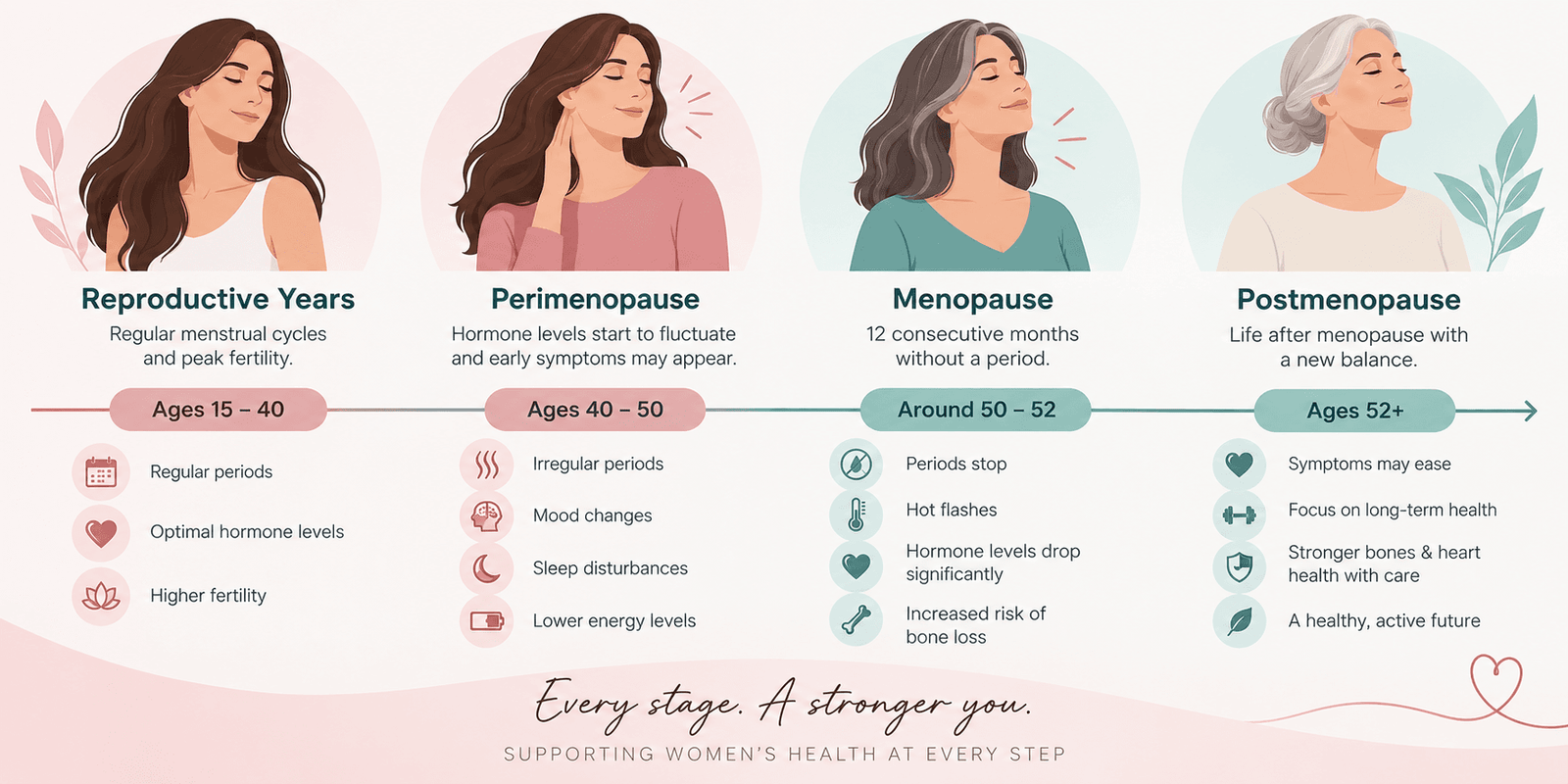
| Stage | What’s Happening | Typical Duration |
|---|---|---|
| Perimenopause | Estrogen begins fluctuating and declining; periods become irregular | Can start 8–10 years before menopause |
| Menopause | The defined moment — 12 months with no period | A single point in time |
| Postmenopause | The rest of life after that point | Ongoing; higher risk of osteoporosis and heart disease |
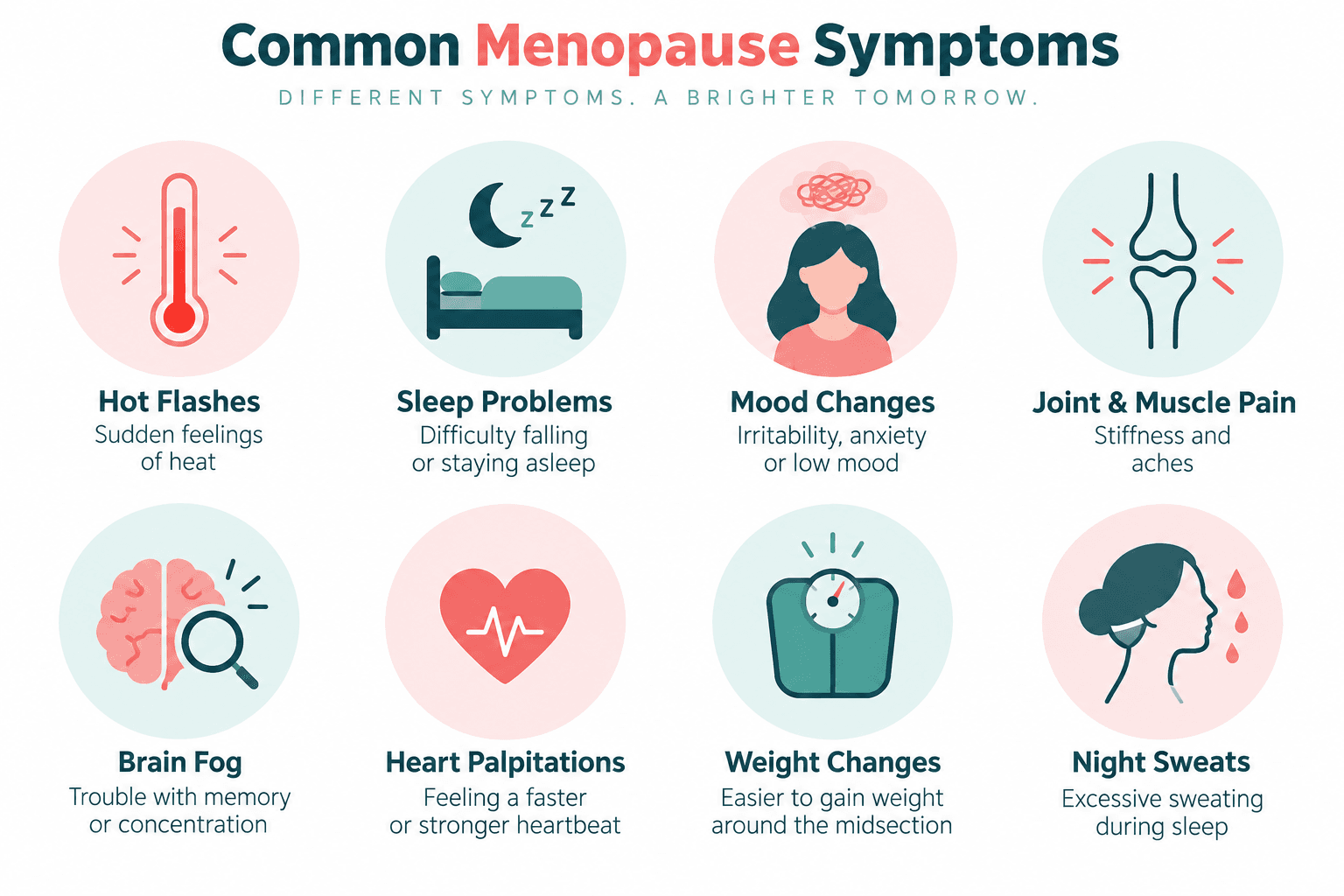
If you notice two or more of these, it’s worth booking a consultation rather than waiting it out. Dubai-based OB-GYNs note that menopause remains under-taught in general medical training globally, so seeking a doctor with specific menopause experience — not just any gynecologist — makes a real difference to the quality of care you receive.
Dubai’s environment adds a few local wrinkles to the menopause experience that women elsewhere may not deal with in quite the same way:
The most common and effective treatment for moderate-to-severe symptoms, available in Dubai as tablets, patches, gels, sprays, or vaginal creams/rings.
Several Dubai facilities go beyond the standard offering:
A specialist consultation costs AED 300–600, comprehensive hormone blood tests cost AED 500–1,200, monthly HRT medication costs AED 150–400, and a DEXA bone density scan costs AED 400–800. Follow-up appointments after the initial visit typically run AED 200–400.
| Item | Approximate Cost (AED) |
|---|---|
| Initial specialist consultation | 300–600 |
| Follow-up consultation | 200–400 |
| Comprehensive hormone blood panel | 500–1,200 |
| DEXA bone density scan | 400–800 |
| Monthly HRT medication | 150–400 |
| Estimated annual cost (moderate-intensity care) | 2,000–5,000 |
Prices vary by facility and are approximate — always confirm current pricing directly with the clinic.
A snapshot of well-known providers currently offering dedicated menopause services in Dubai (not ranked — always verify credentials and book a consultation to see who’s the right fit for you):
Most comprehensive insurance plans in Dubai cover menopause consultations and blood tests, with HRT medications typically covered under pharmacy benefits, and DEXA scans usually covered when ordered by a physician for a clinical indication. Coverage details vary significantly by policy, so it’s worth confirming directly with your insurer or the clinic’s reception team before booking — some plans may also require a GP referral for reimbursement even if the clinic itself allows direct specialist booking.
After menopause, declining estrogen raises the long-term risk of:
This is one of the main reasons doctors recommend continued monitoring (and, where appropriate, bone density scans) well after the hot flashes themselves have settled down.
Contact a doctor right away if you experience:
These symptoms don’t automatically mean something serious, but they should always be checked promptly.
Dubai has over 4,000 licensed physicians across hundreds of clinics, so finding the right menopause specialist means looking beyond a generic “gynecologist” title. A few practical pointers:
1. What age does menopause happen in Dubai/the UAE? Menopause typically occurs between ages 45–55, most commonly around 50–52 — the same global average applies in the UAE, though perimenopausal symptoms can start 8–10 years earlier.
2. How much does a menopause consultation cost in Dubai? An initial specialist consultation typically costs AED 300–600, with follow-up appointments around AED 200–400, depending on the facility.
3. Does insurance in Dubai cover HRT? Most comprehensive insurance plans cover consultations, blood tests, and HRT medications under pharmacy benefits, but coverage varies by policy — always confirm with your insurer.
4. Can I book a menopause specialist in Dubai without a GP referral? At some clinics, such as DCDC in Dubai Healthcare City, you can book directly with a specialist gynecologist without a referral — though certain insurance plans may still require one for reimbursement purposes.
5. What is the difference between perimenopause and menopause? Perimenopause is the transition period, which can start 8–10 years before menopause, marked by fluctuating hormones and irregular periods. Menopause itself is the single point when you’ve gone 12 consecutive months without a period.
6. Is HRT safe? For most healthy women within about 10 years of menopause onset, HRT’s benefits generally outweigh the risks, but combined HRT carries a slightly increased breast cancer risk and oral tablets carry a modestly higher clot/stroke risk than patches or gels. This should always be personalized with your doctor based on your medical history.
7. What are non-hormonal alternatives to HRT? Options include SSRIs/SNRIs, newer medicines like fezolinetant or gabapentin, clonidine, CBT, vaginal moisturizers, and lifestyle changes such as reducing caffeine and maintaining a healthy weight.
8. What is FemiLift and is it available in Dubai? FemiLift is a non-surgical laser treatment for vaginal dryness and related discomfort, offered at select Dubai clinics including King’s College Hospital Dubai’s Aesthetic Gynaecology Clinic.
9. How does Dubai’s climate affect menopause symptoms? The heat and humidity, plus frequent shifts between air-conditioned indoor spaces and outdoor heat, can intensify hot flashes and night sweats for some women.
10. What blood tests are used to assess menopause in Dubai clinics? Comprehensive hormone blood panels (assessing estrogen, FSH, and related markers) typically cost AED 500–1,200 and help confirm menopausal status alongside your symptom history.
11. Do I need a DEXA scan and how much does it cost? A DEXA (bone density) scan is often recommended postmenopause to monitor osteoporosis risk, costing roughly AED 400–800 in Dubai, and is usually covered by insurance when clinically indicated.
12. Can testosterone be prescribed for women in Dubai? Yes — testosterone may be prescribed by a specialist for persistent low libido that hasn’t responded to standard HRT, though coverage and availability can vary.
13. What are red-flag symptoms that need urgent medical attention? Any vaginal bleeding after menopause, unusually heavy periods or large clots, periods lasting over 7 days, cycles under 21 days apart, periods stopping before age 45, or bleeding after sex should all be checked by a doctor promptly.
14. Is menopause support available for women in the workplace in Dubai? Awareness is growing — regional advocacy groups and employer initiatives are increasingly offering menopause-inclusive workplace training, though stigma and limited flexibility still lead some women to quietly step back from senior roles during this life stage.
15. Where can I find a menopause clinic near me in Dubai? Dedicated menopause services are available across Dubai Healthcare City, Jumeirah/Al Safa, Al Wasl, and Bur Dubai through hospital groups like Mediclinic Welcare, King’s College Hospital Dubai, Emirates Hospitals Group, and specialty clinics such as Menovivre and DCDC.
Experience & Expertise: This guide compiles clinically sourced information from Cleveland Clinic, NHS UK, and Dubai-based hospital groups (Mediclinic Welcare Hospital and King’s College Hospital Dubai), cross-checked against current 2026 Dubai clinic pricing and service data.
Authoritativeness: All medical claims are drawn from named, reputable healthcare institutions rather than general web content; Dubai-specific pricing and clinic details are sourced from clinics’ own published information as of 2026.
Trustworthiness: This article does not replace individualized medical advice. Treatment decisions — especially around HRT — should always be made with a qualified doctor or gynecologist who can review your personal and family medical history.
Medical disclaimer: This content is for general educational purposes only and is not a substitute for professional medical advice, diagnosis, or treatment. Always consult a qualified doctor or gynecologist licensed in the UAE for guidance tailored to your situation.