Dubai’s heat non stop air conditioning, and always-on lifestyle have made at-home IV drip services one of the fastest-growing wellness trends in the city. A licensed nurse shows up at your door, hooks you up to a bag of fluids and vitamins, and 45 minutes later you’re supposedly “recharged”, and if you need overnight care, night nurse services can provide the same at-home support.But is it actually right for you — and is the provider you found even legal?
This guide breaks down exactly how at-home IV therapy works, how to verify a provider’s Dubai Health Authority (DHA) license before anyone puts a needle in your arm, what a fair price looks like, and — just as importantly — when you should skip the drip entirely and reach for a glass of water instead.
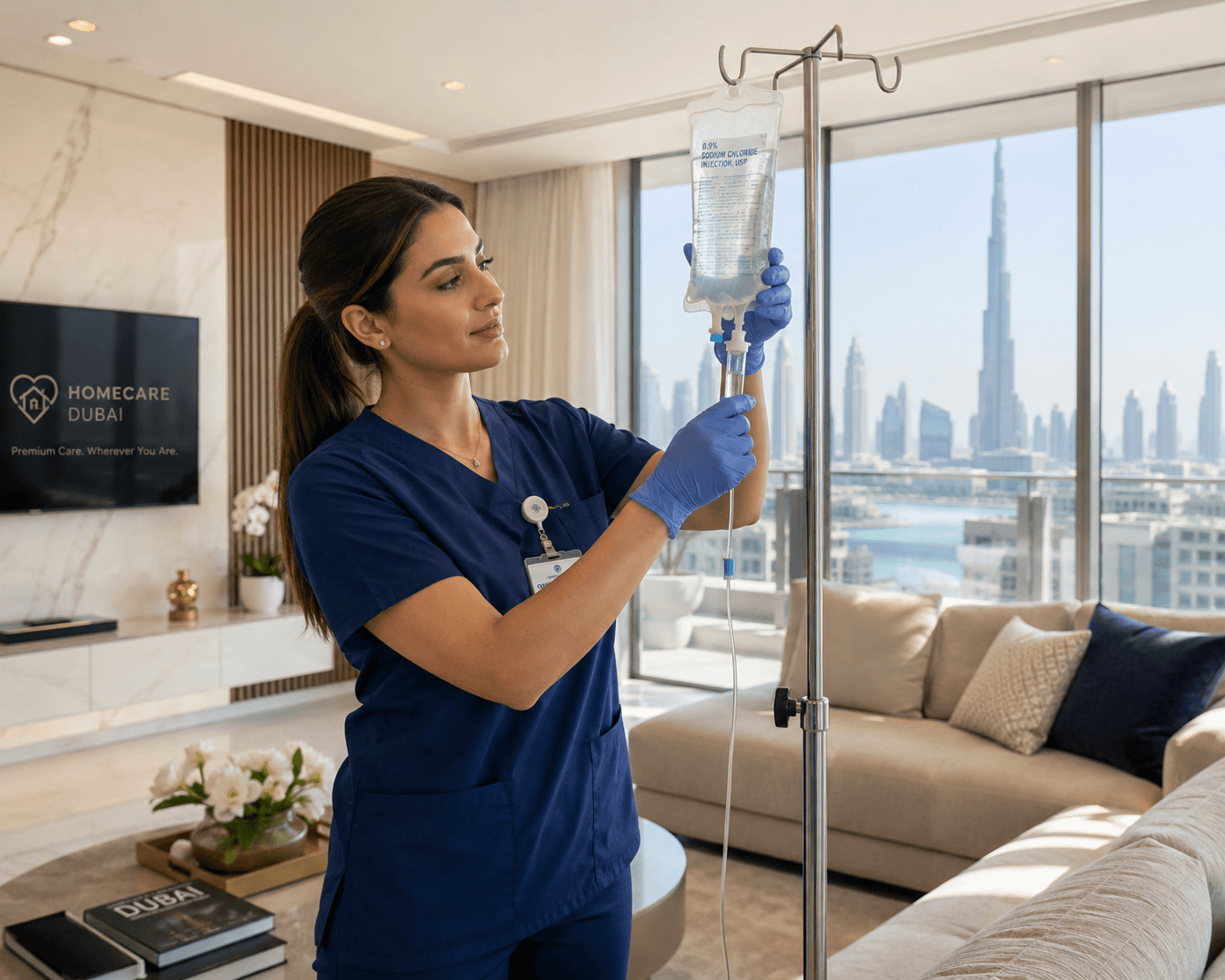
At-home IV therapy delivers fluids, vitamins, minerals, and other additives directly into your bloodstream through a small cannula placed in a vein, usually in the arm or hand. Because the solution enters circulation directly, it skips the digestive system entirely — where absorption is normally slower and incomplete.
That single fact is the entire basis of the treatment. It explains both the appeal (fast, complete absorption) and the risk (there’s no digestive “filter” slowing things down if something goes wrong). According to home healthcare standards published by the Dubai Health Authority, and general medical guidance from sources like the Cleveland Clinic and Mayo Clinic, the mechanism itself is well established — but the added clinical benefit for an otherwise healthy person is limited.
A typical booking looks like this:
Helpful (optional) prep: A home blood pressure monitor and a medical-grade thermometer aren’t required, but having your baseline vitals ready before the nurse arrives can speed things up and gives the nurse useful data to work with.
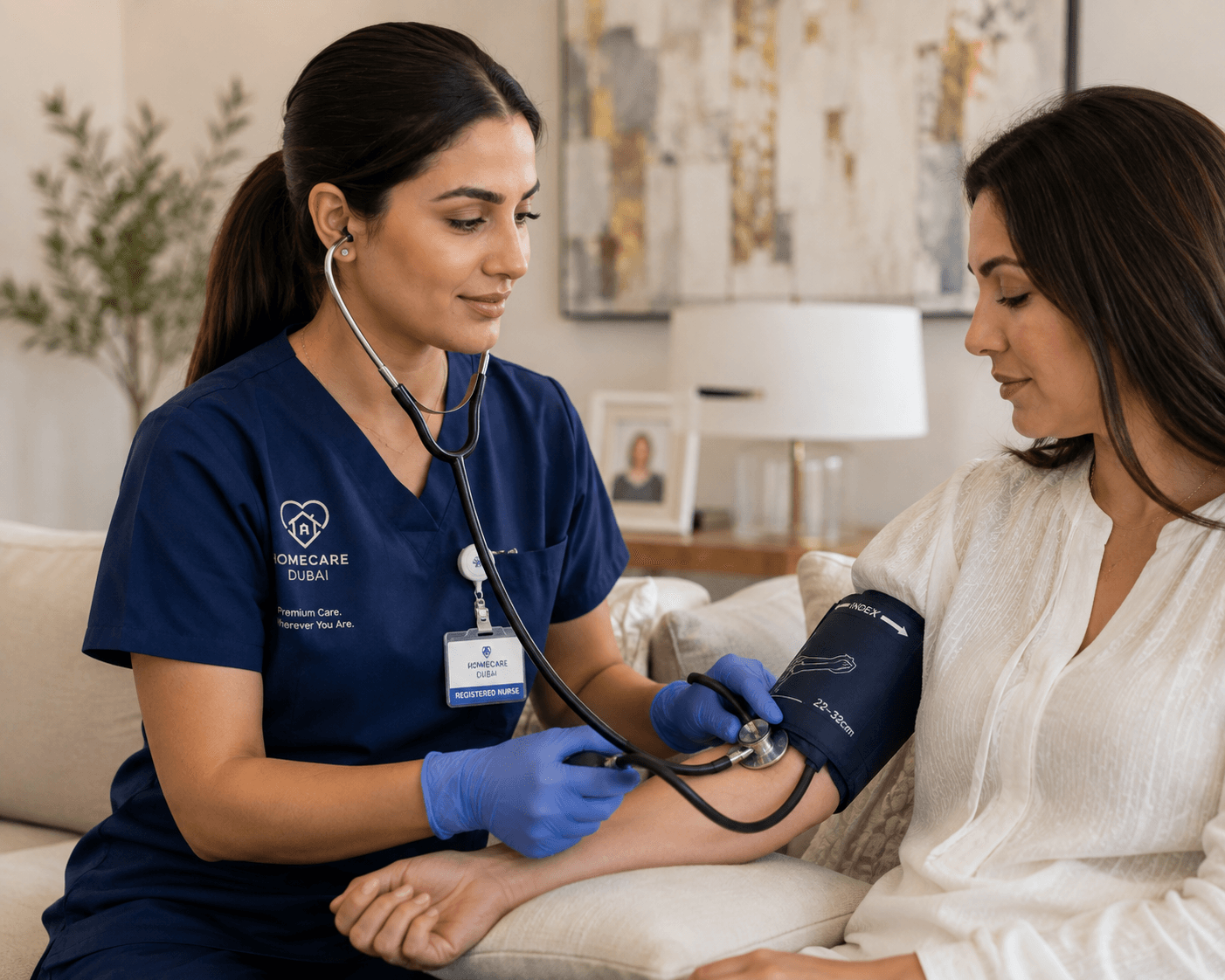
The medical procedure itself doesn’t change — but the setting does. There’s no physician standing next to you, so the provider’s licensing, medical director, and emergency protocol matter far more at home than in a clinic; if you’re in Jumeirah or Umm Suqeim, a local doctor on call can provide that physician backup.
In Dubai, home healthcare is regulated by the Dubai Health Authority (DHA), which requires:
The convenience is real. But it only makes sense once you’ve confirmed the provider is actually playing by these rules.
When you drink water, it has to pass through your stomach and intestines before reaching your bloodstream — a process limited by gastric emptying and intestinal absorption speed. An IV bypasses all of that, which is why it can act faster in cases of severe dehydration or when someone genuinely can’t keep fluids down.
Honest tip: If you’re only mildly dehydrated and can still drink normally, try oral rehydration salts (ORS) first. They cost only a few dirhams at any pharmacy and work nearly as well for most everyday cases.
For mild-to-moderate dehydration from heat, exercise, or travel, ORS is often enough — and far cheaper. The World Health Organization’s ORS formula is specifically designed to maximize gut absorption, and it remains the first-line treatment for dehydration in most clinical settings worldwide.
An IV drip isn’t automatically “better” than water or ORS. It’s a tool for specific situations: when you can’t tolerate oral fluids, when dehydration is severe, or when you want high-dose vitamins that the gut simply can’t absorb well on its own.
| Situation | Best Option | Why |
|---|---|---|
| Mild dehydration, can drink normally | Oral rehydration salts (ORS) | Nearly as effective, costs a few dirhams |
| Severe dehydration, vomiting, can’t keep fluids down | IV drip | Bypasses the gut when oral intake isn’t possible |
| Want high-dose vitamins (e.g., Vitamin C, NAD+) | IV drip | Oral absorption caps out; IV delivers full dose |
| General “wellness” boost with no symptoms | Water / balanced diet | Little evidence IV adds meaningful benefit |
Dubai’s combination of extreme outdoor heat and constant indoor air conditioning creates a sneaky dehydration risk — you lose water through sweat outside and through dry indoor air, often without noticing either. Many residents mistake this for ordinary fatigue, low iron, or thyroid issues, all of which can be checked with an at-home CBC test, when the real culprit is simply chronic mild dehydration. Before booking a drip for “low energy,” it’s worth asking whether this Gulf-climate effect might be the actual cause, or whether an at-home thyroid test would be a smarter first step.
The DHA regulates every home healthcare service operating in Dubai, including at-home IV therapy. Providers must hold a home healthcare facility license, and each nurse must hold an individual DHA license. A physician must also provide oversight, with a clear protocol in place for emergencies. This regulatory framework — publicly documented on the DHA’s own website — is the single most important trust signal for anyone considering the service.
The DHA Sheryan portal is the official system for verifying healthcare facility and professional licenses in Dubai. Before booking, run through this quick check:
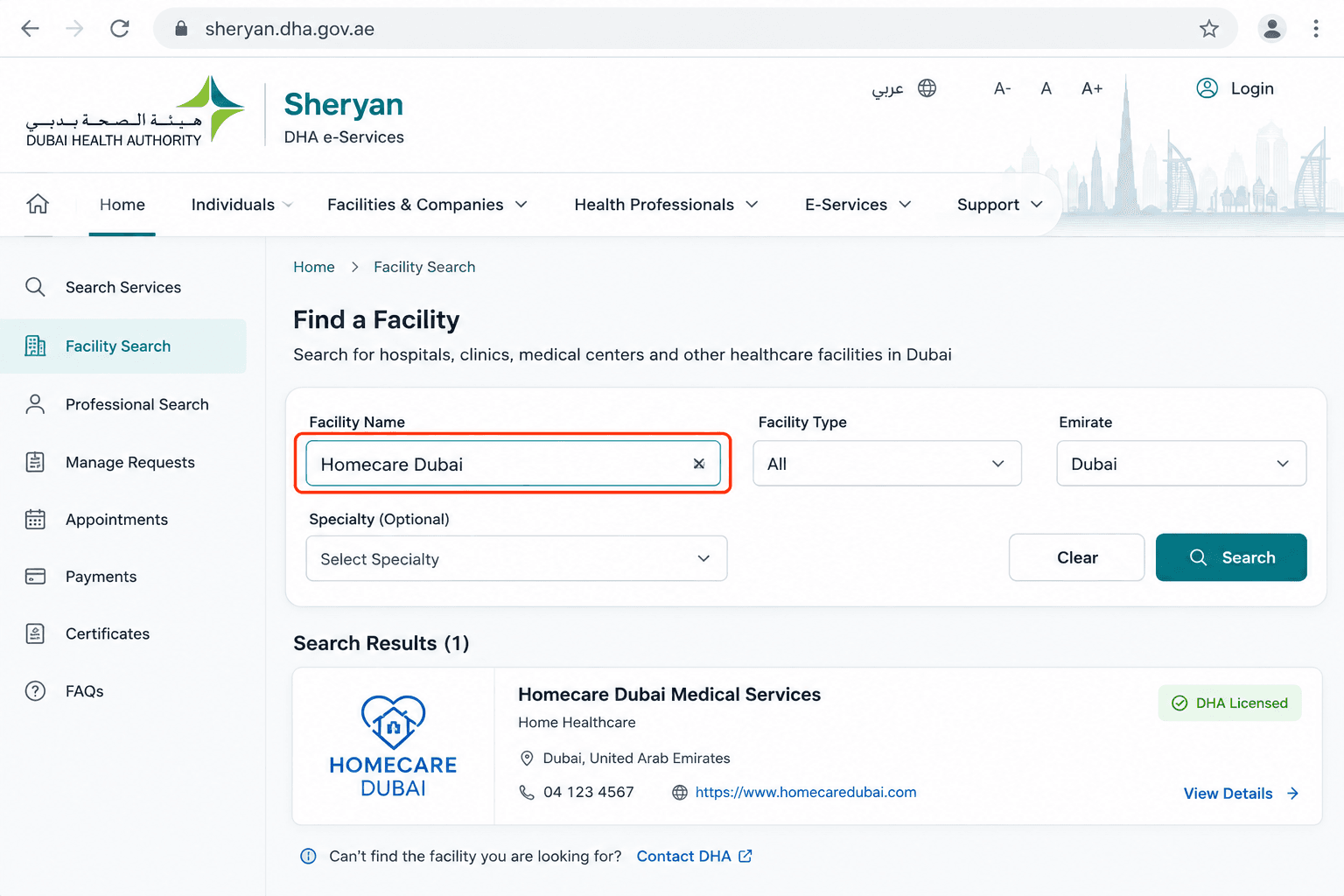
A genuinely licensed operation will answer these questions instantly, without hesitation.
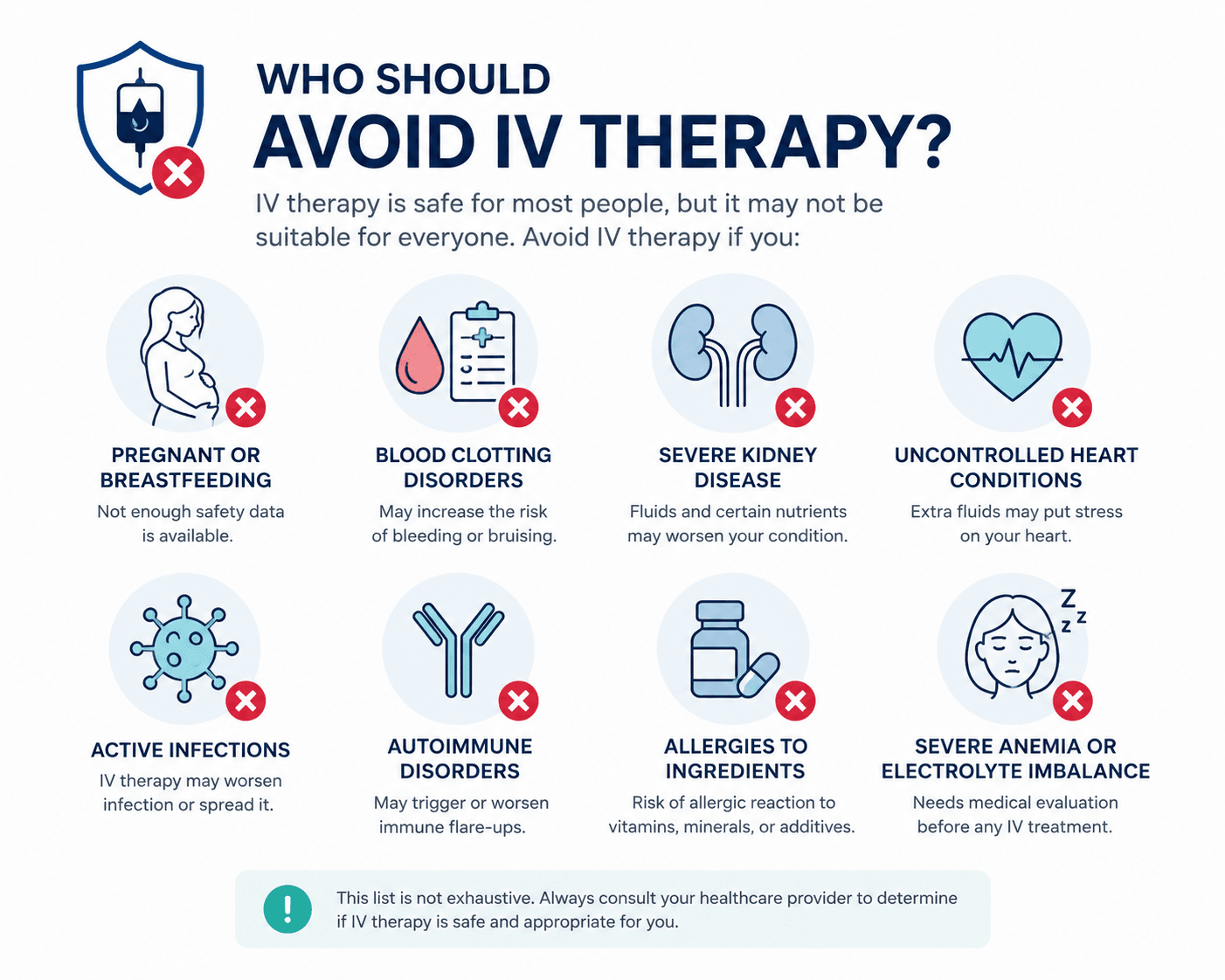
According to guidance from sources such as the Cleveland Clinic and Mayo Clinic, elective IV vitamin therapy should generally be avoided by people with:
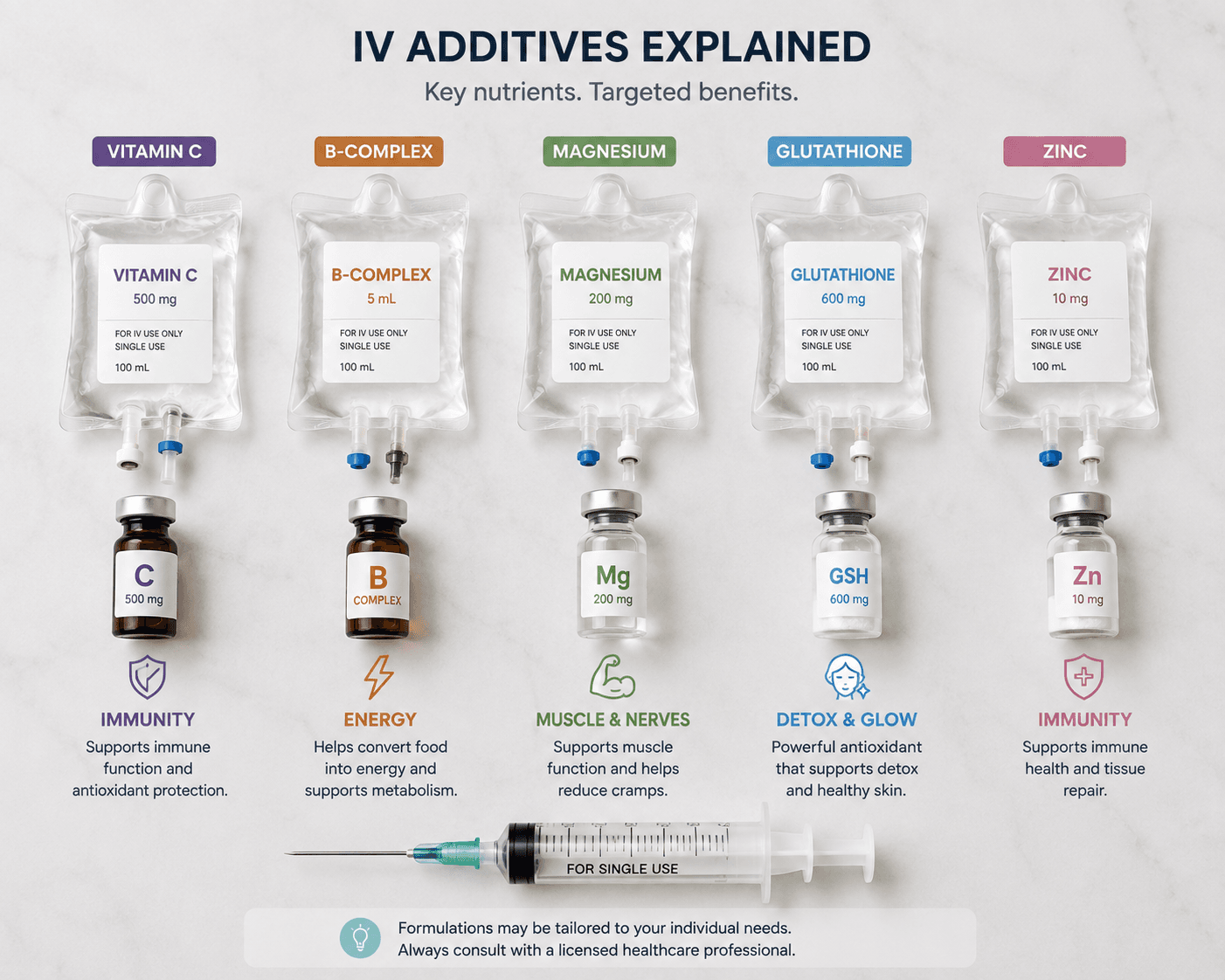
Always ask which carrier fluid is being used, and exactly what additives are in the bag, before the nurse opens a single sachet.
| Additive | Claimed Benefit | Evidence Reality |
|---|---|---|
| Vitamin C | Immunity, skin health | Limited proven benefit for healthy people at high doses |
| B-complex vitamins | Energy, metabolism | Common in “energy”/”recovery” drips |
| Vitamin B12 | Energy, nerve function | Oral B12 works just as well for most people |
| Magnesium | Muscle function, relaxation, sleep | Found in “recovery”/”relaxation” formulas |
| Glutathione | Skin brightening, detox | Popular in Dubai for skin lightening; evidence limited, not approved for this use in many countries |
| NAD+ | Anti-aging, energy, cellular repair | Expensive; evidence in healthy people is weak |
| Goal | Typical Formula |
|---|---|
| Hydration | Normal saline or Lactated Ringer’s, minimal additives |
| Immunity | Vitamin C, zinc, B-complex |
| Skin | Glutathione, Vitamin C, biotin |
| Recovery | B-complex, magnesium, amino acids |
| Energy | B12, B-complex, NAD+ |
A more responsible first step for unexplained fatigue: an at-home blood test panel to rule out low iron, thyroid issues, or other underlying causes — before spending on a drip that only masks the symptom.
| Time | What Happens |
|---|---|
| 0–5 min | Nurse arrives, shows DHA ID, confirms your identity and the booked drip |
| 5–10 min | Suitability check — medical history, allergies, medications, current symptoms, vital signs (BP, heart rate, temperature, oxygen saturation) |
| 10–15 min | Cannulation — a vein is selected, cleaned, and a small cannula inserted (a brief pinch) |
| 15–45 min | Infusion runs slowly; you can rest, read, or work while the nurse monitors for reactions |
| 45–50 min | Cannula removed, pressure and small dressing applied, aftercare instructions given |
| 50–60 min | Final vitals check before the nurse leaves |
During the infusion: stay seated or lying down (don’t stand up quickly — it can cause lightheadedness), tell the nurse immediately about any pain, swelling, burning, or shortness of breath, and drink water before and after to help your body process everything.
Prices vary significantly based on the formula, brand, and whether the home visit fee is bundled in. Here’s a general market snapshot — always confirm current pricing directly with the provider before booking, as these figures can change.
| Provider | Example Package | Starting Price (AED) | Key Ingredients | Home Visit Included |
|---|---|---|---|---|
| Medcare | Immune Boost IV Drip | 1,400 | Vitamin C, zinc, B-complex | Confirm with provider |
| Medcare | NAD+ Anti-Ageing | 1,600 | NAD+ | Confirm with provider |
| Medcare | Skin IV Drip | 690 | Glutathione, Vitamin C | Confirm with provider |
| Skin111 | Glutathione and Vitamin C Drip | 2,423 | Glutathione, Vitamin C | Confirm with provider |
| Dryp Skin | IV Drip (fertility/wellness) | 2,117 | Confirm with provider | Yes (free home visit) |
Prices are indicative starting points based on publicly available information as of publication and are subject to change. Always verify current pricing, package contents, and whether the home visit fee is included directly on the provider’s website before booking.
| Risk | Why It Happens |
|---|---|
| Infection | Any break in the skin carries risk; unqualified providers may skip sterile technique |
| Vitamin toxicity | High doses of fat-soluble vitamins can build up and cause harm |
| Air embolism | Rare but serious; more likely if the line isn’t primed correctly |
| Fluid overload | Especially risky for patients with heart or kidney problems |
| Allergic reaction | Anaphylaxis is rare but possible; provider must have an emergency protocol and physician access |
As Mayo Clinic guidance notes, IV vitamins carry real risks while offering limited proven benefit for people who are already well-nourished — which is exactly why the safety framework around a provider matters more than the marketing.
If you experience chest pain, difficulty breathing, swelling of the face or throat, or a sudden drop in blood pressure, call 998 immediately. Before booking, ask who the medical director is and how to reach a doctor on call mid-infusion if something goes wrong, a licensed provider will answer this without hesitation; an unlicensed one will change the subject.
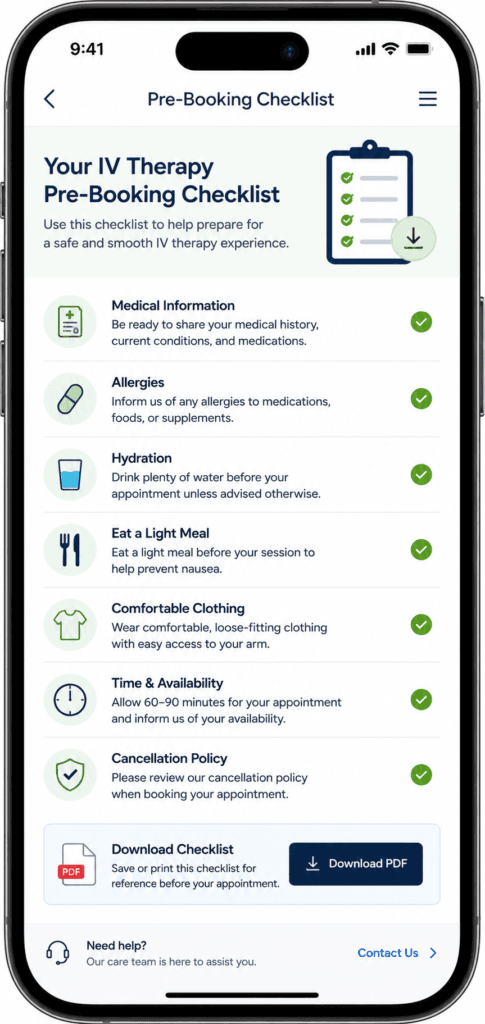
Save this list to your phone and run through it the moment a provider arrives at your door:
Is at-home IV therapy legal in Dubai? Yes — if the provider holds a valid DHA home healthcare facility license and the nurse holds an individual DHA license. Unlicensed freelance nurses advertising on social media are operating illegally and unsafely.
How much does an at-home IV drip cost in Dubai? Prices vary widely, from roughly 690 AED for a basic skin drip to over 2,400 AED for premium glutathione or NAD+ formulas. Always confirm the total cost, including the home visit fee, before booking.
How often can I get an IV drip? There’s no standard frequency. Occasional use for specific situations — severe dehydration, post-travel recovery — is reasonable for most healthy people. Regular “wellness” use isn’t backed by strong evidence and may carry unnecessary risk.
Is IV therapy safe for everyone? No. People with kidney disease, heart failure, high blood pressure, pregnancy, or G6PD deficiency should avoid elective IV therapy unless a doctor specifically prescribes it.
What should I do if I feel unwell during the infusion? Tell the nurse immediately and ask them to slow the drip. If you experience chest pain, difficulty breathing, or facial swelling, call 998 right away.
Can I eat or drink before the drip? Yes, eat and drink normally. Drinking water before and after the infusion actually helps your body process the fluids and vitamins.
How do I verify a provider’s DHA license? Use the DHA Sheryan portal. Search for the facility name and the individual nurse’s name, then check the license status and expiry date.
Your pre-booking action plan:
When to skip the drip entirely:
This article was last reviewed on August 30, 2026. Pricing and DHA regulatory information are checked periodically and may change — always confirm current details directly with the DHA Sheryan portal and your chosen provider before booking.