Last reviewed: September 2026 · Medically reviewed by Dr Maryam Ibrar — DHA License No. 1583900 · Sources: IDF Diabetes Atlas American Diabetes Association, Dubai Health Authority (DHA)
Quick answer: In Dubai, a home HbA1c or fasting glucose test through a DHA-licensed home collection service typically starts around AED 60–150 for the test itself, with call-out and courier fees on top. A daily glucometer check costs nothing beyond your strips. Book a DHA-licensed provider, confirm the itemized price before the nurse arrives, and you will have lab-grade results the same day, without a clinic waiting room.
If you have ever stared at a clinic price list and wondered which diabetes test you actually need, this guide walks you through the options, the real costs in Dubai, and what your results mean, without the medical jargon.
You know you should check your blood sugar. But between HbA1c, fasting glucose, and OGTT, the options blur together, and Dubai’s clinic prices rarely make the choice clearer.
Here is the cost of putting it off. The Middle East and North Africa region already has the highest diabetes prevalence among older adults anywhere in the world, at 32.3%, with related healthcare spending across the region reaching USD 35 billion in 2024 (source: IDF Diabetes Atlas), which is why elderly care in Dubai increasingly includes routine glucose monitoring for this at-risk group. Zoom in on the UAE specifically, and the numbers are just as stark — recent World Bank/IDF-sourced estimates put diabetes prevalence among UAE adults aged 20–79 at roughly one in five, among the highest rates anywhere in the world. Long fasting windows, needle anxiety, packed work schedules, and pricing that clinics rarely publish upfront all keep people from testing early. Late detection means more complications and higher long-term costs, both medical and financial.
This guide breaks down every diabetes test available at home in Dubai, what each one measures, realistic starting prices from DHA-licensed providers, how to read your results, and when to see a doctor. By the end, you will know exactly which test to book and what to expect.
What you get from reading this: save time, avoid surprise fees, understand your numbers, and test with confidence — all without a half-day clinic visit.
Who this guide is for:
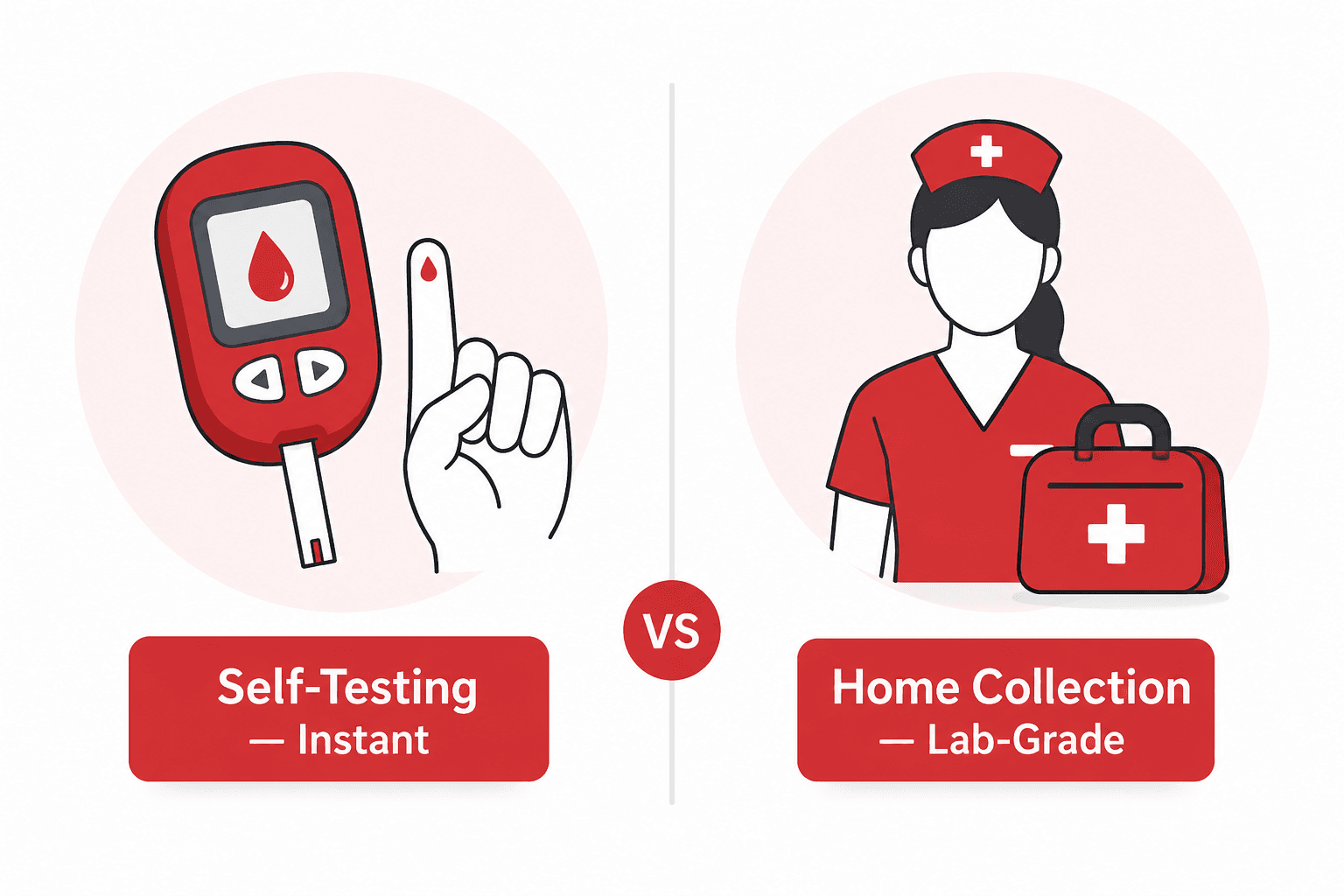
Two paths exist:
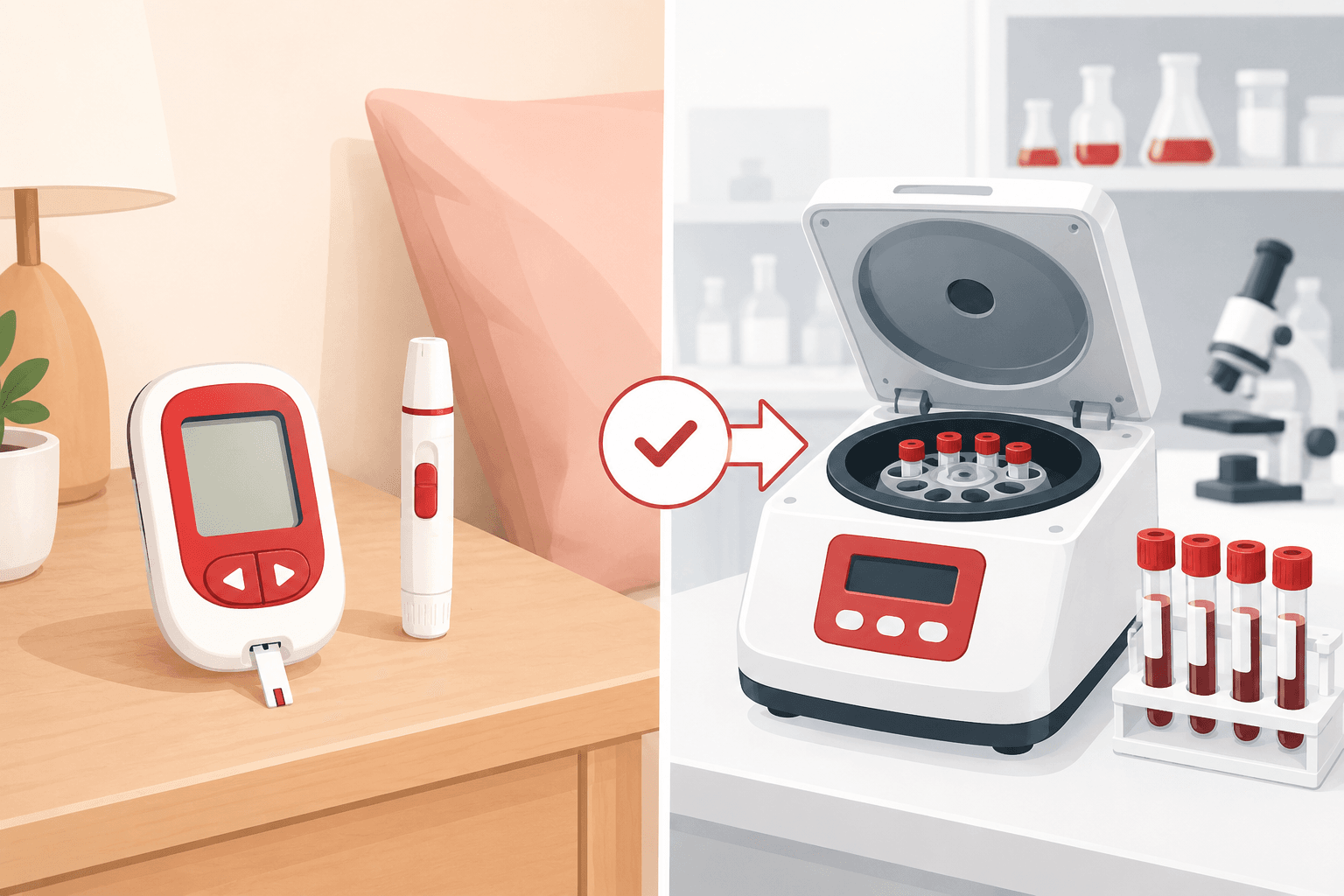
The trade-off is simple: self-testing gives you an instant but less precise number. Home collection gives you lab-grade accuracy, just without the clinic visit, the same route works for other panels like an at-home CBC test if you need a broader blood workup.
The UAE’s diabetes burden makes prevention a priority, not an afterthought. The Dubai Health Authority has been a data source for the IDF’s diabetes estimates for the UAE (source: DHA/IDF), reflecting how central local screening data has become to understanding the problem. Many residents test not because they are managing an existing condition, but because they want to catch prediabetes before it progresses — and prediabetes is reversible with early lifestyle changes in a way that established diabetes is not.
Expert tip: Fast for 8 to 12 hours before a fasting glucose test. Plain water is fine — coffee, tea, and juice are not.
| Test name | What it measures | Fasting required | Typical result time | Best for |
|---|---|---|---|---|
| HbA1c (glycated hemoglobin) | Average blood sugar over 2–3 months | No | Same day to 24 hours (provider-dependent) | Long-term diabetes control and screening |
| Fasting blood glucose | Blood sugar after an overnight fast | Yes, 8–12 hours | Same day to 24 hours (provider-dependent) | Diagnosing diabetes and prediabetes |
| Oral glucose tolerance test (OGTT) | How the body processes glucose over 1–2 hours | Yes, 8–12 hours | 24–48 hours (provider-dependent) | Gestational diabetes screening; confirming borderline results |
| Daily glucometer monitoring | Current blood sugar at a single moment | No (for routine daily checks) | Immediate | Day-to-day management and trend tracking |
Note: exact turnaround times vary by lab and provider — always confirm at booking.
Decide between self-testing (glucometer or HbA1c kit) and professional home collection. Check that any provider you book is DHA-licensed before you hand over payment details (see the licensing section below).
Most Dubai providers offer online booking with same-day or next-day slots.
Expert tip: Ask for itemized pricing that includes the call-out fee, the collection fee, and any courier charge — before you confirm the booking, not after the nurse leaves.
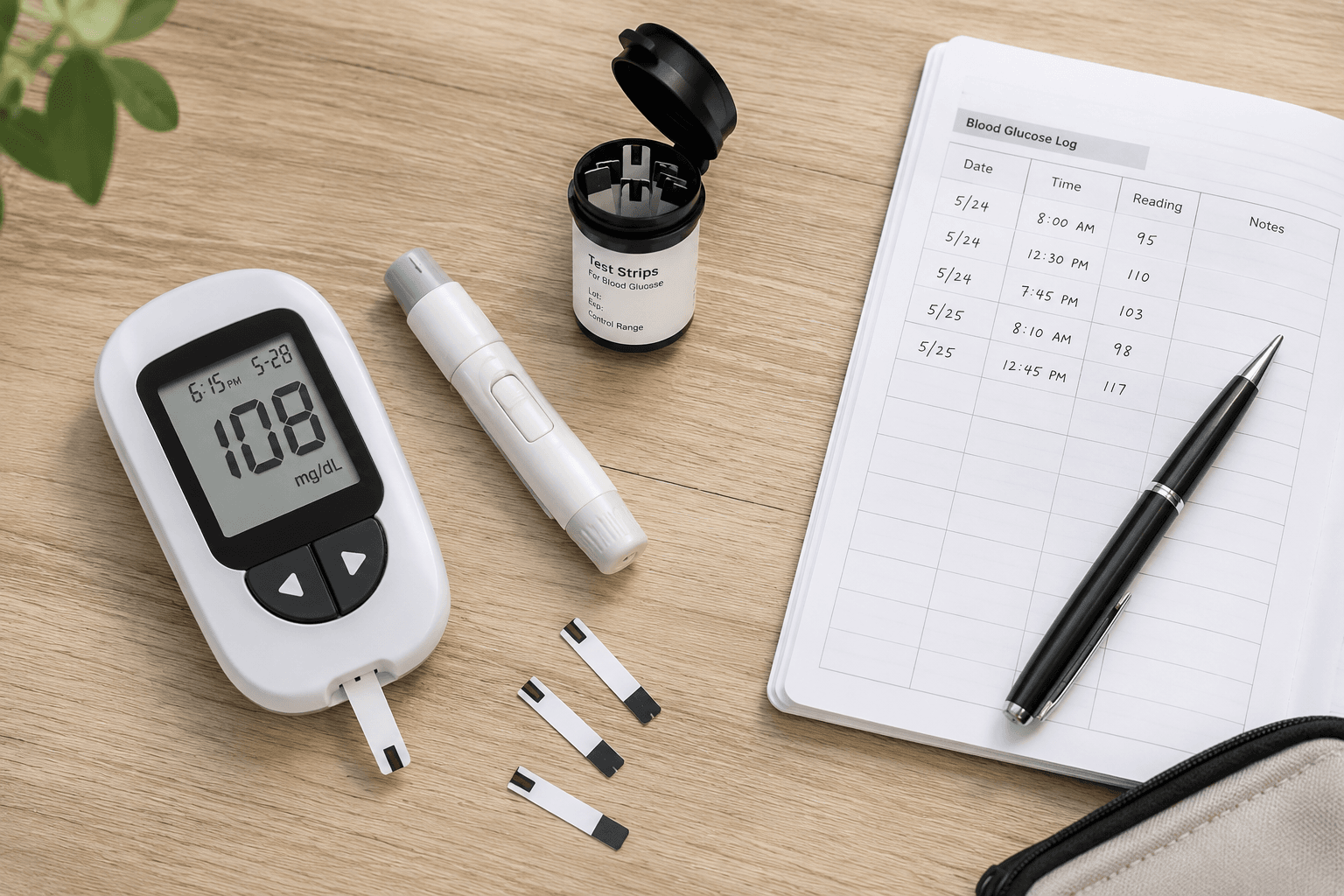
For fasting tests, schedule the visit around your fasting window and your work hours — most people book early morning slots. For finger-prick self-tests, wash your hands with soap and warm water first.
Expert tip: Food residue or hand cream can skew a finger-prick reading. Wash and dry your hands fully before testing.
For home collection, a DHA-licensed nurse visits, draws the sample, and handles transport to the lab. For self-testing, use the second drop of blood, not the first, and avoid squeezing the fingertip hard — squeezing dilutes the sample with tissue fluid and can throw off your reading.
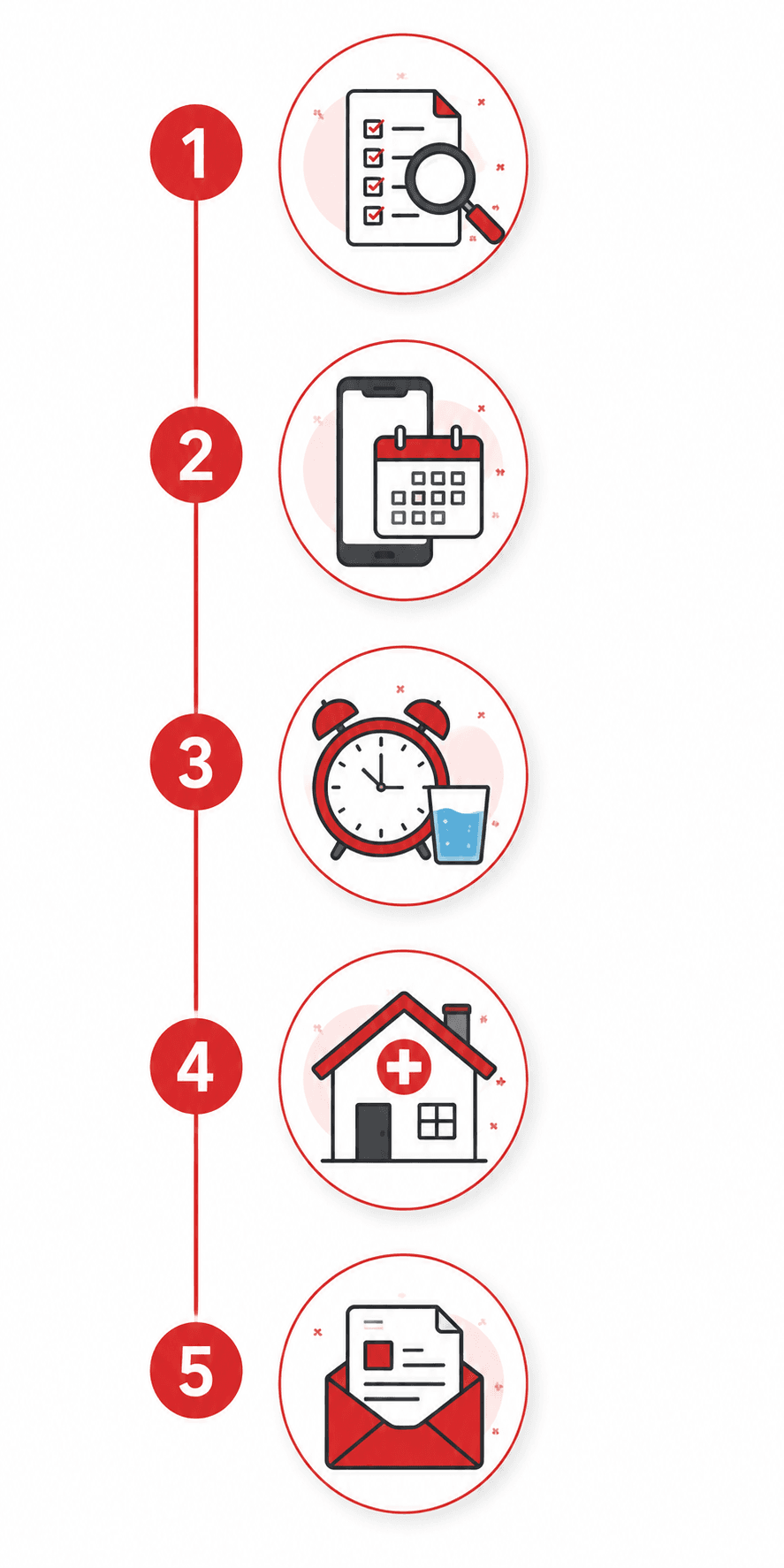
Results typically arrive by app, email, or phone call; some providers offer same-day delivery for straightforward tests.
Expert tip: Confirm any unusual home result with a laboratory test before changing your medication or diet on your own.
Call-out fees, collection fees, courier charges, and the specific test ordered all change your total. Starting prices you see advertised rarely include every fee — always ask for the itemized total before you book.
| Test / Service | Starting price (self-pay) | Notes |
|---|---|---|
| Basic blood sugar / glucose test | From AED 60 | Entry-level pricing seen at some DHA-approved clinics; home collection usually adds a call-out fee |
| Standard blood test at home (panel including glucose) | From AED 120 | Home-collection service with results in about 24 hours |
| Diabetes screening test | From AED 100 | Price commonly includes sample collection and a standard lab report |
| HbA1c test | From AED 149 | Same-day results reported by some Dubai diagnostic centers |
| Full diabetes screening panel (HbA1c + fasting glucose + related markers) | From AED 399 | Bundled panel pricing at select diagnostic centers |
Insured patients typically pay only a co-pay (roughly 10–20%) rather than the full self-pay rate — confirm your specific plan’s coverage before booking.
Important: These are starting, self-pay reference prices gathered from published Dubai provider pricing pages as of September 2026. Actual prices vary by provider, test combination, and whether a home visit is included. Prices change — always confirm the final, itemized quote directly with the provider before booking.
Home glucometers and HbA1c kits carry an upfront cost for the device, plus an ongoing cost for test strips and lancets. Strip and lancet costs add up faster than the meter itself if you test daily, so factor in the recurring spend, not just the sticker price of the device.
Hand cleanliness and correct technique are the two biggest factors in meter accuracy — bigger, in practice, than the meter brand itself. Storage conditions matter too, especially given Dubai’s heat and humidity.
Expert tip: Store test strips in their original, sealed vial, away from heat and humidity. A strip left in a hot car for even a short time can give an inaccurate reading.
Glucose meter manufacturers such as Accu-Chek publish accuracy guidance noting that results can be affected by temperature, altitude, and technique, and the American Diabetes Association notes that at-home A1C test kits give a useful general indication of your average blood sugar, while laboratory testing remains the more accurate, clinically actionable standard.
At-home HbA1c testing is genuinely useful for monitoring trends between clinic visits. But any result that looks unusual should be confirmed with a lab test and discussed with a healthcare provider before you act on it; depending on your symptoms, your doctor may also order a urine test in Dubai to check for related complications such as ketones or protein.
Age, family history, weight, and lifestyle all factor in, and given how common diabetes already is across the UAE population, general caution is warranted even without a specific risk factor, particularly since hormonal imbalances can also affect glucose levels and hormone balance testing may be worth discussing with your doctor. If you have been told you are prediabetic, you should be testing on a regular schedule to catch any progression early, not waiting for symptoms.
Expert tip: If you have diabetes, HbA1c every 3 to 6 months is the standard interval — not daily. Daily glucometer checks are a separate routine, used for real-time management, and how often you do them depends on your treatment plan and your doctor’s advice.
Pregnant women need gestational diabetes screening, typically through an OGTT, usually between weeks 24 and 28 of pregnancy (confirm exact timing with your obstetrician). People with prediabetes should monitor regularly to catch any progression toward type 2 diabetes while lifestyle changes can still make the biggest difference.
Because Dubai has a genuinely international patient population, you may see your results reported in either mmol/L or mg/dL depending on the lab. Here is both, side by side, using standard American Diabetes Association reference ranges.
| Test | Normal | Prediabetes | Diabetes |
|---|---|---|---|
| HbA1c | Below 5.7% | 5.7% – 6.4% | 6.5% or above |
| Fasting blood glucose (mg/dL) | Below 100 mg/dL | 100 – 125 mg/dL | 126 mg/dL or above |
| Fasting blood glucose (mmol/L) | Below 5.6 mmol/L | 5.6 – 6.9 mmol/L | 7.0 mmol/L or above |
| OGTT 2-hour (mg/dL) | Below 140 mg/dL | 140 – 199 mg/dL | 200 mg/dL or above |
| OGTT 2-hour (mmol/L) | Below 7.8 mmol/L | 7.8 – 11.0 mmol/L | 11.1 mmol/L or above |
Reference ranges follow American Diabetes Association diagnostic criteria. A single abnormal result is not a diagnosis — diabetes and prediabetes are typically confirmed with a repeat test or a second test type. Always interpret your results with a licensed doctor.
This table has been reviewed by [Endocrinologist Name, MD], a DHA-licensed [specialty], License No. [XXXXX], as of [review date].
Coverage varies by insurer and by plan, and many plans require pre-approval for home collection specifically, even when the same test would be covered at a clinic. Ask both your insurer and the testing provider before you book — don’t assume home collection is billed the same way as an in-clinic visit.
Check the Dubai Health Authority’s licensing portal, or simply ask the provider for their license number directly. A DHA license means the provider follows regulated standards for sample handling, storage, and results reporting — it is the single most important thing to confirm before letting anyone draw your blood at home.
Expert tip: Always confirm DHA licensing before booking a home blood collection. A legitimate provider will give you their license number without hesitation.
Very high or very low readings — especially alongside symptoms — need urgent medical attention, not a wait-and-see approach. Any home result that genuinely surprises you should be confirmed with a lab test promptly, and a doctor on call in Jumeirah can help you interpret urgent results without a clinic visit.
Excessive thirst, frequent urination, blurred vision, unexplained weight loss, or confusion are signs that warrant prompt medical attention rather than another round of home testing. (Always confirm specific red-flag thresholds with your doctor — this list is general guidance, not a diagnostic checklist.)
If a clinic visit is genuinely inconvenient, telehealth or a home visit doctor in Dubai can help you interpret a result quickly and decide on next steps.
Expert tip: Store test strips in their original sealed vial, away from heat and humidity — this matters more in Dubai’s climate than almost anywhere else.
Do I need to fast for an HbA1c test? No. HbA1c reflects your average blood sugar over the past two to three months, so fasting is not required. This is what makes it the most convenient lab test for a busy schedule.
How accurate are home test results compared to lab tests? Home glucometers are reliable when your hand-washing and technique are correct, but a laboratory test remains more accurate for diagnosis. At-home HbA1c kits are good for spotting trends but should be confirmed with a lab test before you act on an unusual result.
Does insurance cover at-home diabetes testing in Dubai? It depends on your plan and insurer. Some plans require pre-approval for home collection specifically. Check with both your insurer and the testing provider before booking.
How do I book a DHA-licensed home blood collection in Dubai? Choose a provider, verify their DHA license number, book online or by phone, and ask for itemized pricing that includes the call-out fee, the collection fee, and any courier charge.
What should I do if my home result is abnormal? Confirm the unusual result with a laboratory test before changing your medication or diet, and discuss it with a doctor as soon as you reasonably can.
Can I test for gestational diabetes at home? Yes — OGTT home collection is available through some DHA-licensed providers in Dubai, but not all of them offer it. Confirm availability when you book, since it is a less common home-collection option than HbA1c or fasting glucose.
How often should I test my blood sugar? If you have diabetes, HbA1c every 3 to 6 months is standard. Daily glucometer checks depend on your doctor’s advice and your specific management plan — they are not automatically required every day.
How much does a diabetes home test cost in Dubai? Based on published Dubai provider pricing as of September 2026, a basic blood sugar or glucose test can start from around AED 60–100, while a dedicated HbA1c test starts from around AED 149, and a full diabetes screening panel starts from around AED 399. Home collection typically adds a call-out fee on top of the test price — always ask for the full itemized total.
Is a home glucometer as accurate as a lab test? Not quite. A well-maintained glucometer, used with clean hands and proper technique, is accurate enough for day-to-day trend tracking, but laboratory testing (including DHA-licensed home blood collection, which uses the same accredited labs as clinics) remains the more precise standard for diagnosis and formal monitoring.
What is the difference between fasting glucose and HbA1c? Fasting glucose measures your blood sugar at one specific moment, after 8–12 hours without food. HbA1c measures your average blood sugar over the past two to three months and does not require fasting. Doctors often use both together, especially to confirm a borderline result.
Who should get tested for diabetes in Dubai even without symptoms? Given the UAE’s high diabetes prevalence, general screening is reasonable for adults with any combination of family history, higher body weight, an inactive lifestyle, or age over 40 — even without symptoms. Ask your doctor how often you should screen based on your personal risk profile.
Pick the test that matches your situation, verify the provider’s DHA license, ask for itemized pricing upfront, and book. The whole process takes less time than sitting in a clinic waiting room — and knowing your numbers now is worth far more than the ten minutes it takes to check them.
This article is for general informational purposes and does not replace individualized medical advice. Always consult a licensed doctor about your specific results and health situation.