If you typed “PCOS” into a search engine and landed on a page that says “PMOS” instead, you haven’t made a mistake. In May 2026, an international consensus of clinicians, researchers, and patients formally renamed polycystic ovary syndrome (PCOS) to polyendocrine metabolic ovarian syndrome (PMOS). Same condition, new name.
PMOS is common. It affects about one in eight women, yet up to 70% of people who have it don’t know it — often for years, and often after being told their symptoms are “normal” or “just stress.”
If your periods show up unpredictably, or not at all, and you’ve also noticed more facial hair or stubborn acne, that combination is worth bringing to a clinician, because it may point to PMOS rather than to separate, unrelated issues.
The symptoms are not only physical. Missed work, wedding dresses that don’t fit the way you expected, hair you didn’t ask for, and years of being dismissed take a real emotional toll. Anxiety and depression are more common in people with PMOS, and that deserves just as much attention as your hormone levels.
This guide walks you through what changed with the name, how to recognize PMOS in yourself, how it’s diagnosed, and how treatment is chosen based on your own goals — whether you’re trying to conceive now, planning to later, or not planning a pregnancy at all. Use the self-check list below, then bring your notes to your next appointment.
In May 2026, a multistep global consensus process — led by the Endocrine Society, the American Society for Reproductive Medicine (ASRM), and more than 50 patient and professional organizations worldwide — renamed polycystic ovary syndrome (PCOS) to polyendocrine metabolic ovarian syndrome (PMOS). The change was published in The Lancet and followed more than a decade of research and input from over 22,000 patients.
Here’s the part that matters most to you: PMOS is the new name for PCOS. The condition itself hasn’t changed. Only the label has.
If you were diagnosed with PCOS before 2026, your diagnosis still stands. It is now called PMOS.
The old name, “polycystic ovary syndrome,” put the focus on ovarian cysts. But many people with the condition don’t actually have ovarian cysts, and the name never captured what’s really going on: a whole-body hormonal (endocrine) and metabolic condition, not just an ovarian one.
The rename reflects that broader picture. It’s meant to reduce stigma, cut down on missed and delayed diagnoses, and push providers to think beyond the ovaries — toward the hormones, metabolism, skin, mental health, and fertility that the condition actually touches.
| Stays the same | Changes | |
|---|---|---|
| What | Symptoms, diagnostic criteria, treatment options | Terminology and clinical emphasis |
| Why it matters | Your care plan doesn’t need to be redone | Providers may now focus more on metabolic health, not just cysts or fertility |
Does my diagnosis change? No. Your condition and its management are the same. The new name may simply help your care team keep the whole picture — hormones, metabolism, and reproductive health — in view.
Because up to 70% of people with PMOS don’t know they have it, recognizing your own symptoms is often the first real step toward getting help.
Symptoms vary a lot from person to person. Some people have nearly all of these; others have just one or two. No single symptom confirms PMOS on its own — that’s exactly why an evaluation matters.
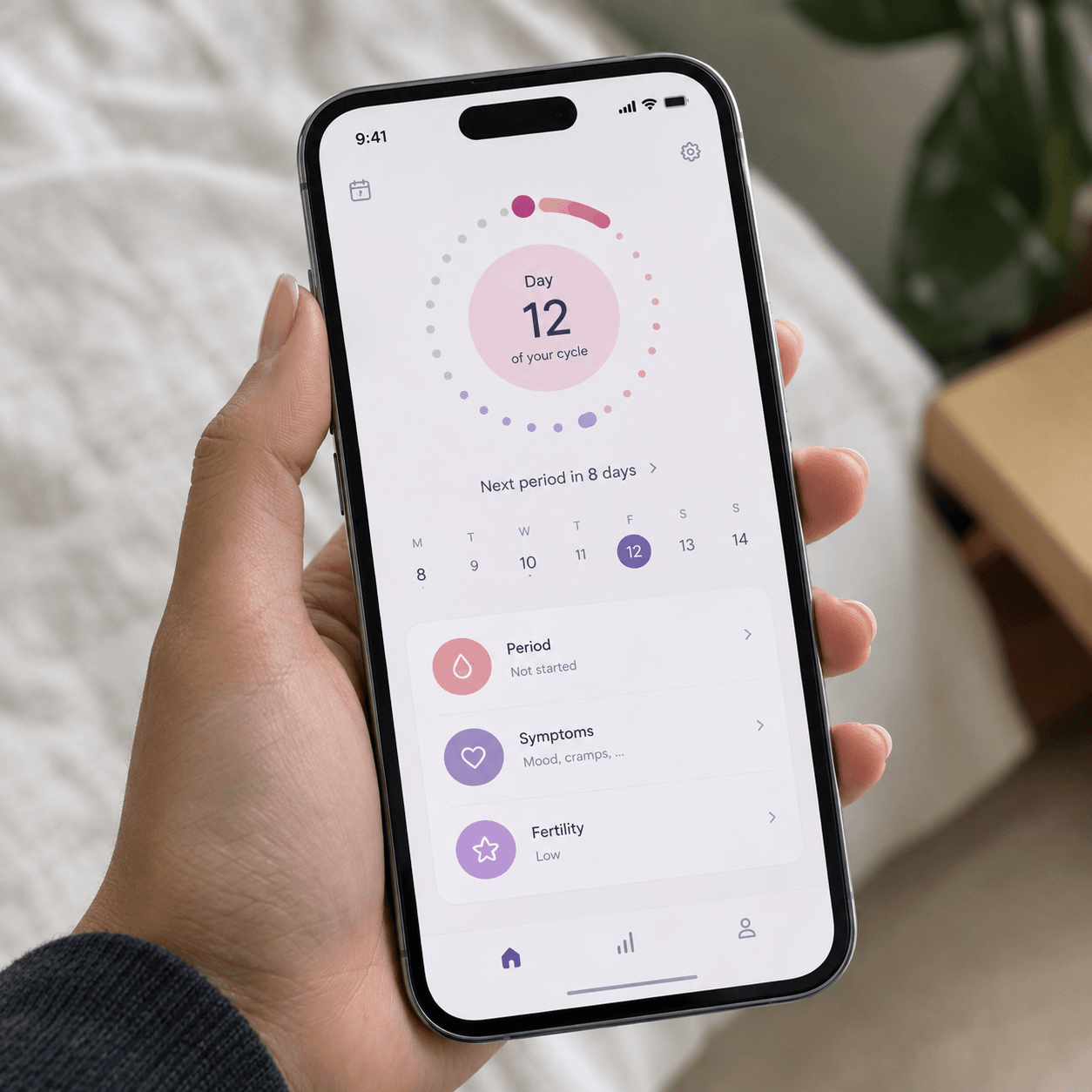
Clinician’s tip: Track your cycles and symptoms for two to three months before your appointment. A period-tracking or symptom app makes this easy, and it gives your clinician a much clearer picture of how irregular and how severe things really are.
This part gets skipped on a lot of health pages, and it shouldn’t be.
Anxiety and depression are more common in people with PMOS. That’s not “all in your head” — it deserves screening and support just as much as your blood work does. Unwanted hair growth, acne, and weight changes can wear down self-esteem in ways that build up quietly over months and years, especially when providers have dismissed those concerns before.
Clinician’s tip: Don’t downplay how you feel. Ask your provider about mental health screening. Two short, validated questionnaires — the PHQ-9 for depression and the GAD-7 for anxiety — are commonly used and take only a few minutes to complete.
Go through both lists. Check anything that applies to you over the last several months.
Group 1 — Menstrual and fertility signs
Group 2 — Androgen and metabolic signs
If you checked several items — especially irregular periods plus one or more androgen signs — bring this list to a clinician.
This checklist is for self-awareness only. It is not a diagnosis and does not replace a medical evaluation.
In many people with PMOS, the body makes insulin normally, but cells respond to it poorly — a state called insulin resistance. In response, the ovaries can produce more androgens (hormones like testosterone that everyone has, but in smaller amounts). Higher androgen levels are what drive symptoms like excess hair growth and acne.
This is exactly why the name changed: PMOS isn’t only an ovarian condition. It’s an endocrine and metabolic one, with the ovaries as just one part of the picture.
PMOS tends to run in families. If your mother or sister has it, your own risk is higher. Genetics load the gun, but environment and lifestyle influence whether — and how strongly — symptoms show up.
Carrying excess weight can worsen insulin resistance and intensify symptoms, but PMOS also occurs in people at a normal weight. Weight is a contributing factor, not a requirement for diagnosis.
It’s also worth saying plainly: weight gain in PMOS is often a symptom of the underlying metabolic issue, not a personal failure.
Diagnosis is clinical. Most clinicians use the Rotterdam criteria: a PMOS diagnosis requires at least two of three features, once other conditions that could explain the symptoms have been ruled out.
| Criterion | What it means | How it’s assessed |
|---|---|---|
| Oligo-ovulation or anovulation | Irregular, infrequent, or absent ovulation — usually experienced as unpredictable or missed periods | Menstrual history and cycle-tracking records; sometimes a blood progesterone test |
| Clinical and/or biochemical hyperandrogenism | Signs or lab evidence of excess androgens: unwanted facial/body hair, acne, or scalp thinning | Physical exam; blood tests for testosterone and related markers |
| Polycystic ovaries on imaging | Ovaries with many small follicles, reflecting altered follicle development | Pelvic or transvaginal ultrasound |
Note: exact ultrasound thresholds are set by clinical guidelines and can be refined over time — your clinician will apply the current standard used in your care setting.
A typical evaluation includes:
Clinician’s tip: Ask for a full metabolic workup at diagnosis — not just hormone tests. That means fasting glucose, HbA1c, a lipid (cholesterol) panel, and a blood pressure check.
This screening catches insulin resistance and cardiometabolic risk early, which is central to understanding PMOS as a whole-body metabolic condition, not just a reproductive one.
There’s no single treatment for PMOS. What’s right for you depends heavily on one question: are you trying to conceive now, planning to in the future, or not planning a pregnancy at all?
First-line treatment is usually ovulation-induction medication, often paired with lifestyle changes. A fertility specialist or reproductive endocrinologist is commonly involved once pregnancy becomes the immediate goal.
Clinician’s tip: If pregnancy is a current goal, talk to your provider about ovulation-induction medications early. They’re effective, but they carry some risk of multiple pregnancies and ovarian overstimulation — both worth discussing up front.
If pregnancy is on the horizon but not right now, the focus shifts to preserving your metabolic and hormonal health in the meantime: lifestyle habits, cycle regulation, and metabolic screening, so your body is in the best position when you’re ready.
Having PMOS does not mean pregnancy is impossible. Many people with PMOS conceive, often with the right combination of support and treatment.
Combined hormonal contraceptives are commonly used to regulate cycles, lower androgen levels, and reduce acne. Depending on your symptoms and metabolic status, your provider may also discuss anti-androgen medications or metformin.
Clinician’s tip: If you’re not planning pregnancy, combined hormonal contraceptives can regulate your cycle, lower androgen levels, and clear up acne — often within a few months.
Lifestyle isn’t a side note in PMOS care — it’s first-line treatment. It improves symptoms and lowers long-term risk, independent of weight loss.
There’s no single “PMOS diet.” What helps most is balanced meals with fiber and protein that support steady blood sugar, rather than extreme or restrictive eating. Build around what fits your own preferences and culture — not a rigid plan that’s hard to sustain.
Prioritize a mix of resistance training and regular aerobic activity. Exercise improves metabolic health and symptoms on its own, independent of whether the scale moves. A simple weekly structure — a few strength sessions and a few aerobic sessions — goes further than an intense plan you can’t stick with. Reducing long stretches of sitting matters too.
Even a modest 5–10% reduction in body weight can improve ovulation, insulin sensitivity, and symptoms. Set realistic goals rather than chasing large losses.
Weight loss is a tool for metabolic health, not a moral requirement. It’s genuinely harder to lose weight when insulin resistance is working against you — that’s physiology, not a lack of willpower.
Poor sleep and chronic stress both worsen insulin resistance and symptoms. Practical, low-cost steps help: consistent sleep timing, stress-reduction habits, and asking your provider about mental health screening.
Clinician’s tip: Get screened for sleep apnea and keep an eye on your blood pressure — PMOS raises long-term cardiometabolic risk, and both are easy to miss until they’ve progressed.
PMOS is a lifelong, whole-body condition. Proactive monitoring isn’t about fear — it’s about staying ahead of problems while they’re still easy to manage.
Insulin resistance, excess androgens, and irregular cycles can each contribute, over time, to a higher risk of:
Bring this checklist to your visits:
Reach out to a clinician if you notice:
Many people are managed well by a primary care clinician or general gynecologist. A specialist becomes especially useful when symptoms are complex, fertility is affected, or metabolic concerns need closer attention.
Is PMOS the same as PCOS? Yes. PMOS is the new name adopted in May 2026, reflecting the endocrine and metabolic nature of the condition.
Can I still get pregnant with PMOS? Many people with PMOS do conceive — often with lifestyle changes, ovulation-induction medication, or fertility support. Having PMOS does not mean pregnancy is impossible.
Does the name change affect my diagnosis or treatment? No. The condition and its management are the same. The new name may help providers focus on the whole-body metabolic picture.
What is the best diet for PMOS? There’s no single “PMOS diet.” Balanced meals that support steady blood sugar, along with regular activity and realistic weight goals, are the evidence-based foundation.
Do I need to see a specialist? Not always. Many people are managed by a primary care clinician or gynecologist. An endocrinologist or PMOS-experienced gynecologist becomes helpful when symptoms are complex, fertility is affected, or metabolic concerns are present.
Is PMOS curable? It’s a lifelong condition, but symptoms and long-term risks can be managed well with the right combination of lifestyle changes, medication, and monitoring.
Why did they rename PCOS to PMOS? To reduce stigma and better reflect the endocrine and metabolic nature of the condition, rather than over-emphasizing ovarian cysts.
This content is reviewed by a board-certified endocrinologist or gynecologist with PMOS-specific clinical experience
This article is for general educational purposes only and is not a substitute for professional medical advice, diagnosis, or treatment. Always consult a qualified healthcare provider with questions about your own health.
Last reviewed: September 17, 2026