
A tuberculosis (TB) test checks whether you have been infected with Mycobacterium tuberculosis. Two main tests are used worldwide: the tuberculosis skin test (TST/Mantoux) and the tuberculosis blood test (IGRA). Most clinics hospitals and public health centers offer same-week appointments and results are ready in 48–72 hours (skin test) or same day to a few days (blood test).
Tuberculosis is a bacterial infection that mainly affects the lungs and spreads through the air when an infected person coughs or sneezes. A TB test does not diagnose active disease by itself it tells you whether your immune system has ever reacted to TB bacteria. A positive result means you need further evaluation chest X-ray sputum test) to check whether the infection is latent (inactive not contagious or active (contagious needs treatment).
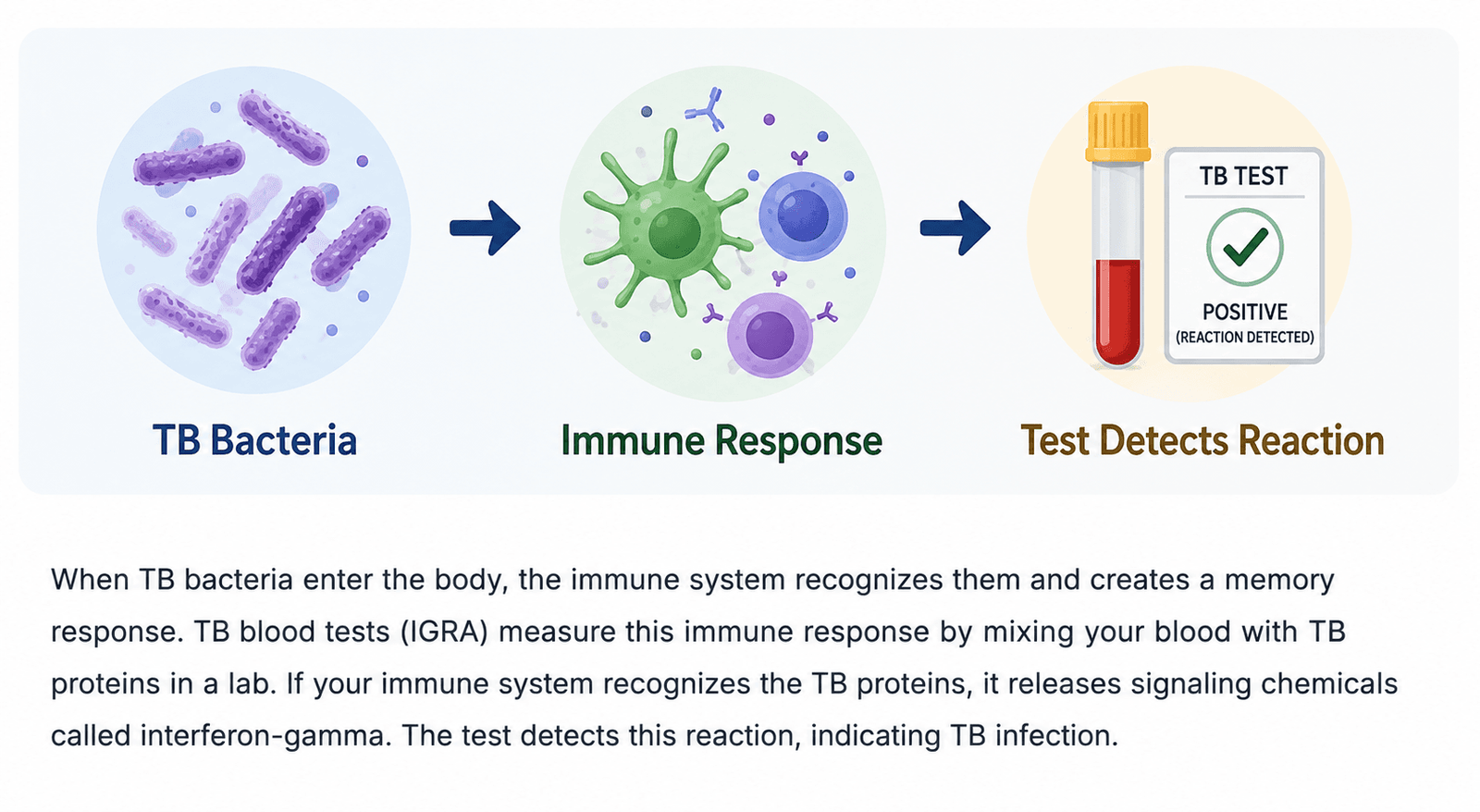
Types of Tuberculosis Tests
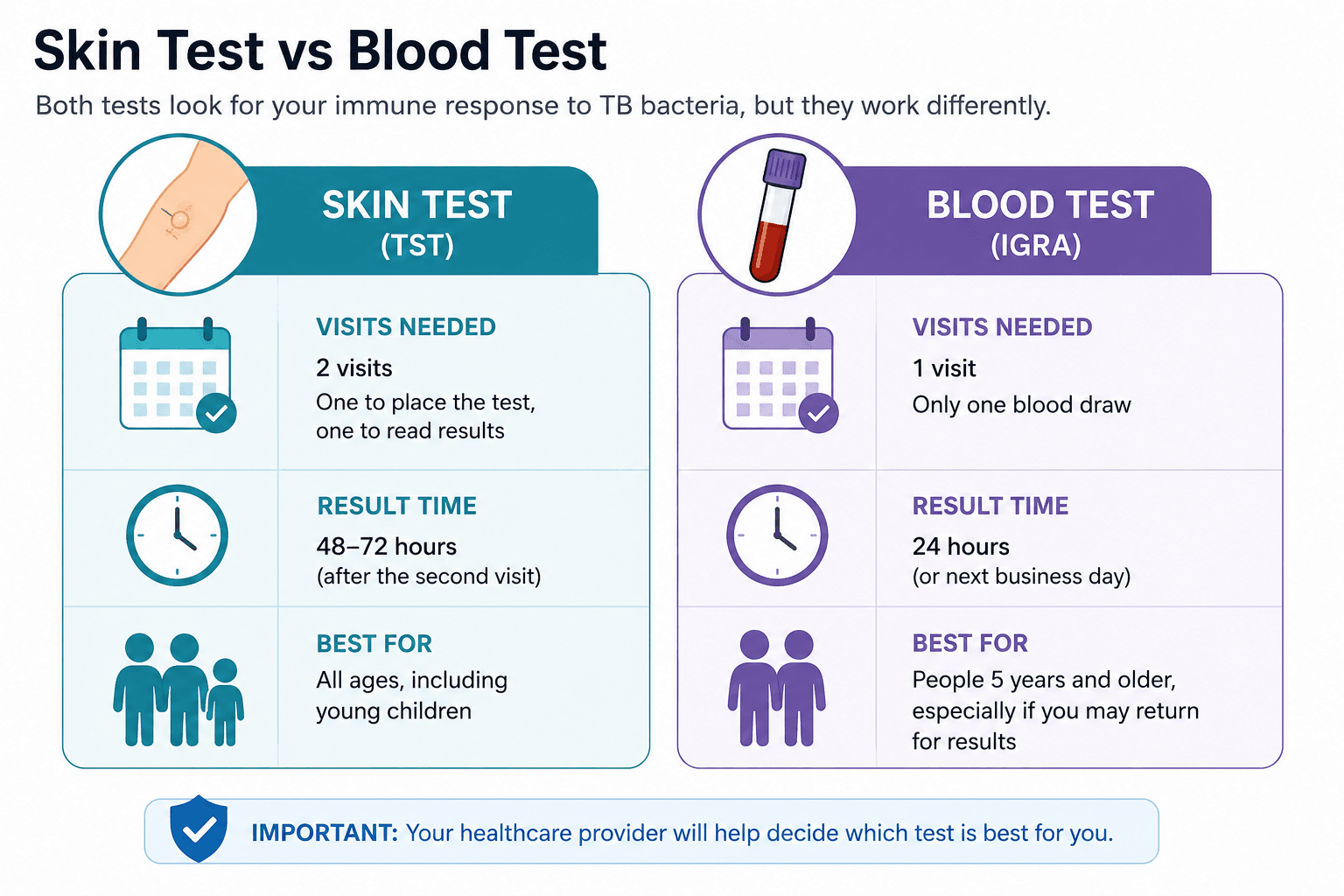
Feature | Skin Test (TST) | Blood Test (IGRA) |
Visits required | 2 | 1 |
Result time | 48–72 hours | Same day–3 days |
Affected by BCG vaccine | Yes | No |
Sample | Skin injection | Blood draw |
Who Should Get Tested?
Where to Get a TB Test Near You
TB tests are available at:
Tip: If you need the test for a visa application check your destination country’s official immigration or embassy website for its list of approved clinics before booking since results from non-approved centers are typically not accepted.
How Accurate Are TB Tests?
Both TST and IGRA are reliable screening tools but neither is 100% definitive on its own:
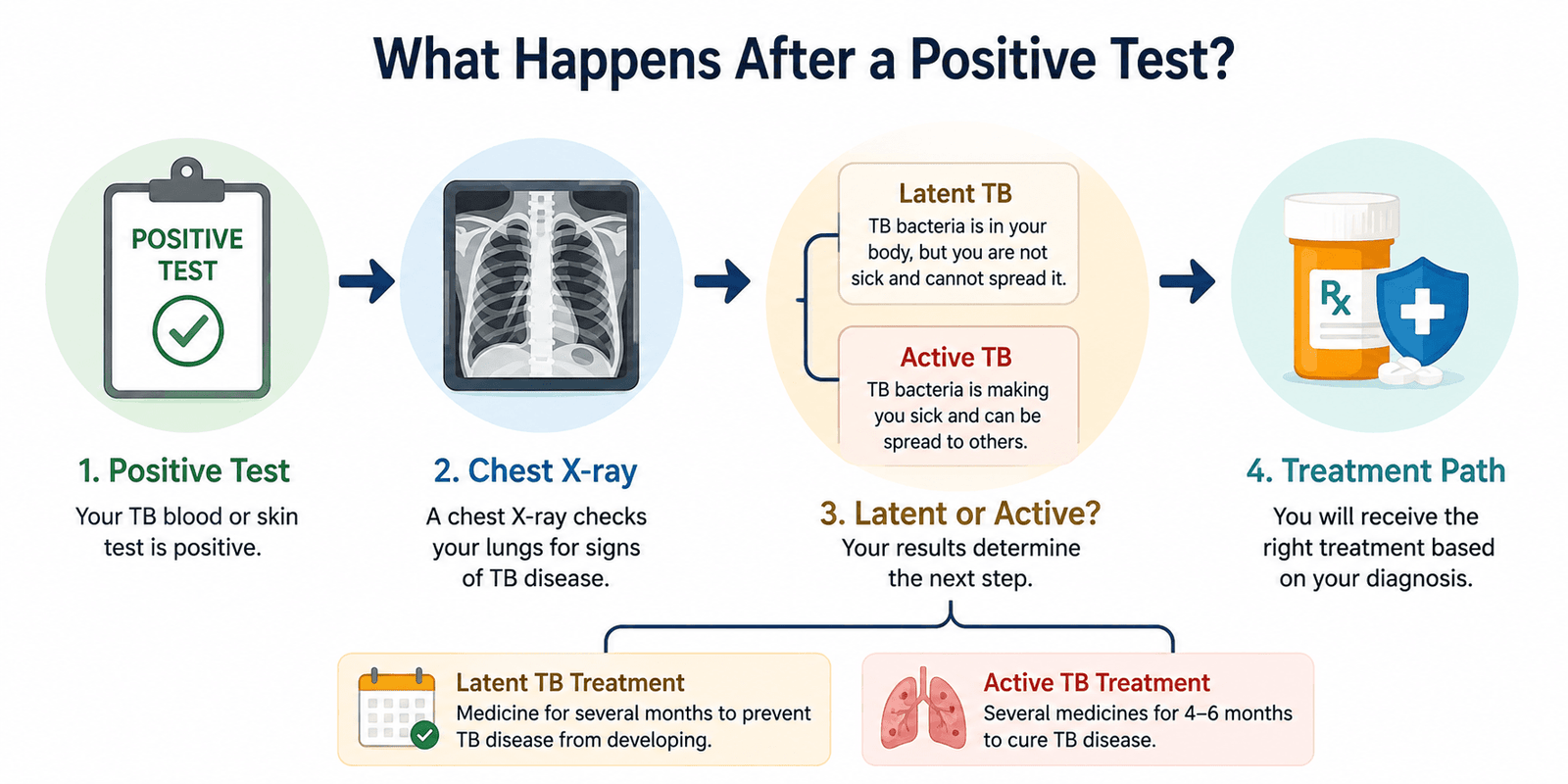
What Happens After a Positive Result?
Cost of TB Testing
Cost varies widely by country clinic type and whether it’s for medical or immigration purposes:
Always confirm the current fee directly with the clinic before your appointment.
Key Takeaways
Frequently Asked Questions (FAQs)
Search your local health department hospital or diagnostic lab directory. For visa purposes use your destination country’s official approved-clinic list.
It varies by country and clinic type; public health clinics are often free or low-cost while private and visa-approved clinics charge a set fee.
Neither is universally “better” — the blood test needs only one visit and isn’t affected by BCG vaccination while the skin test is widely available and low-cost.
Skin test results are read 48–72 hours after the injection. Blood test results are typically available within a few days.
No. A positive result means you’ve been infected at some point; further tests (chest X-ray sputum test) determine if the infection is active or latent.
The skin test involves a small injection that causes minor discomfort; the blood test feels like a standard blood draw.
It can cause a false positive on the skin test. The blood test (IGRA) is not affected by BCG vaccination.
Validity periods are set by the destination country’s immigration authority so always check current rules for your specific visa type.
Valid photo identification and for visa purposes any required application documents. Approved clinics may have additional requirements.
Yes. Testing is recommended for people with known TB exposure certain occupations or visa requirements even without symptoms.
A cough lasting 3 or more weeks chest pain coughing up blood fatigue weight loss fever and night sweats.
Yes both latent TB infection and active TB disease are treatable with antibiotics especially when caught early and treatment is completed fully.
Yes. The skin test or blood test can be used depending on age and clinical guidance; a doctor will advise the appropriate option.
No fasting is required for the TB blood test (IGRA).
TB spreads through the air when a person with active pulmonary TB coughs speaks or sneezes and someone nearby breathes in the bacteria.
Your provider may recommend a blood test (IGRA) or repeat testing to confirm the result.
Many insurance plans cover TB testing especially when medically indicated or required for employment; check with your provider for specifics.
Disclaimer:This article is for general informational purposes and does not replace professional medical advice. Always consult a licensed healthcare provider or your destination country’s official immigration guidance for testing requirements specific to your situation.