Getting a blood test sounds simple — until you realize half the accuracy of your results depends on what you did in the 12 hours before you sat in the chair. A missed instruction (like drinking coffee “because it’s just black”) can distort your glucose, cholesterol, or liver panel enough that your doctor orders a repeat blood test, wasting your time and money.
This guide breaks down exactly which blood tests need fasting, for how long, what “fasting” actually allows, and how to prepare — based on current DHA/MOHAP-aligned lab standards used across Dubai clinics in 2026.
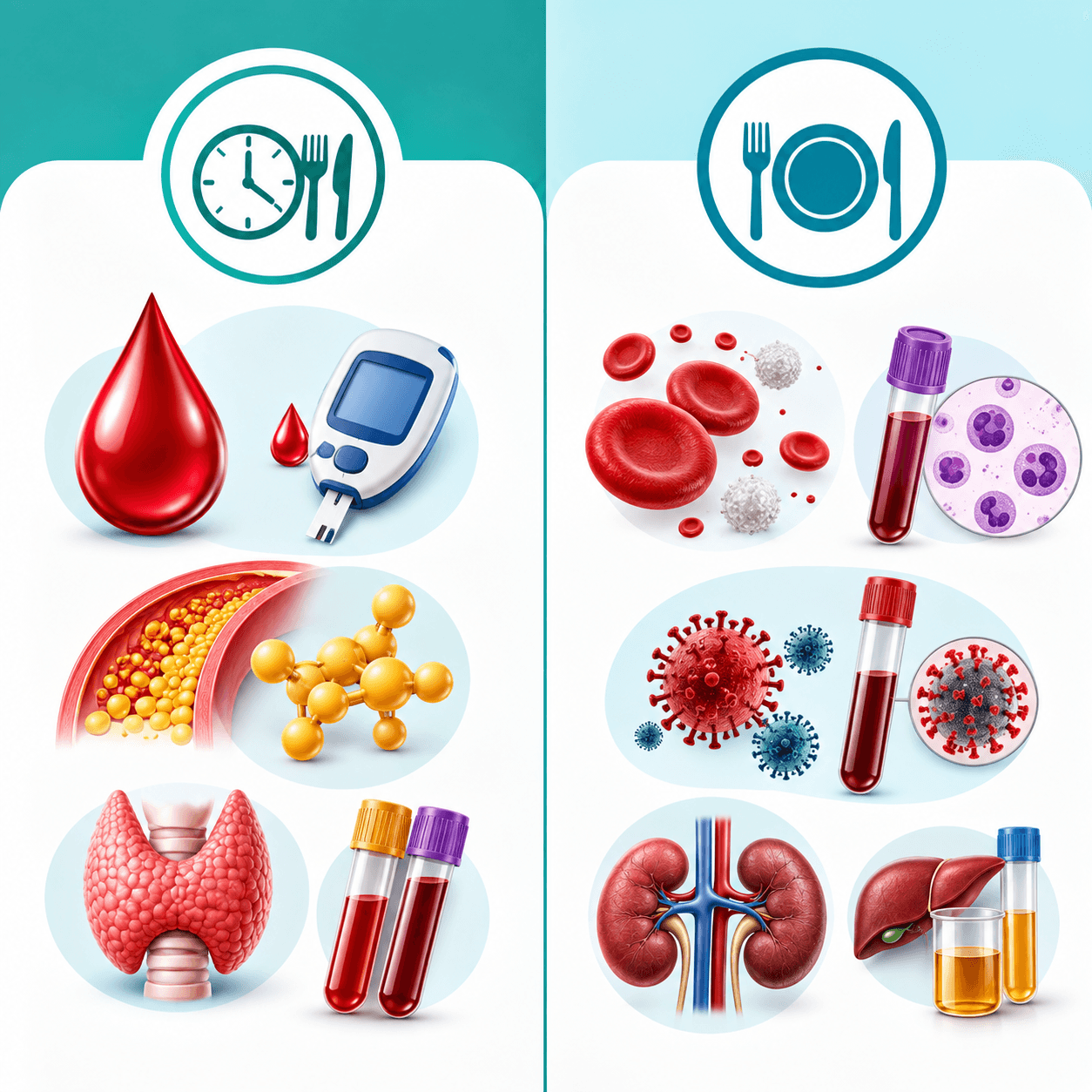
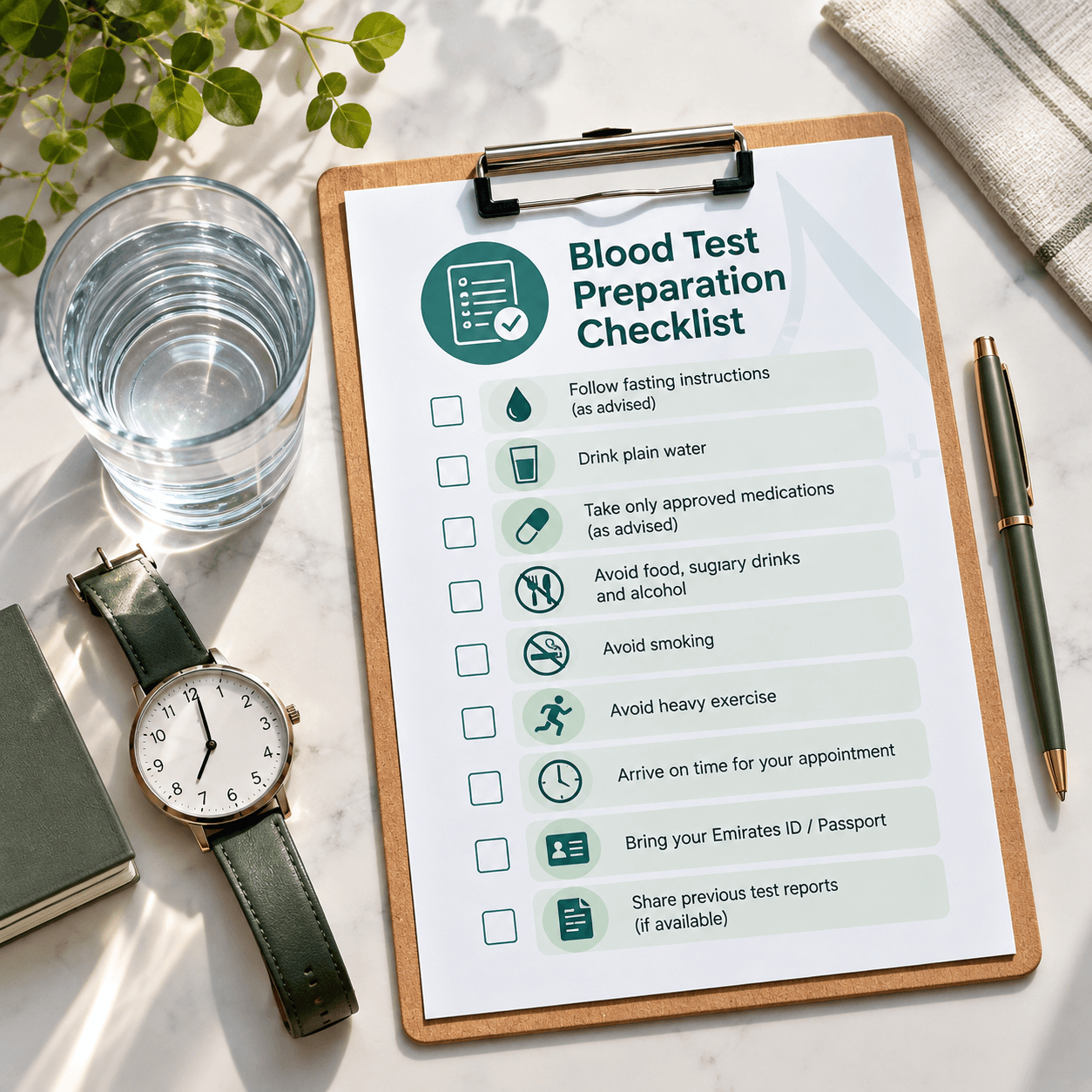
Do I need to fast before a blood test? It depends on the test. Fasting glucose, lipid profile (cholesterol), fasting insulin, and iron studies require 8–12 hours of fasting (water allowed). CBC, thyroid panel (TSH/T3/T4), vitamin D, vitamin B12, and most hormone and autoimmune tests do not require fasting — you can eat and drink normally beforehand.
Not all blood tests are affected by food. Fasting is required mainly for tests where digestion directly changes the blood marker being measured, glucose and fat metabolism, primarily, whereas hormone panels used to assess PCOS symptoms and treatment do not require fasting.
| Test Name | Fasting Required? | Duration | Water Allowed? | Best Time to Test |
|---|---|---|---|---|
| Fasting Blood Glucose (FBS) | Yes | 8–12 hrs | Yes | 7–9 AM |
| Lipid Profile (Cholesterol) | Yes | 10–12 hrs | Yes | 7–9 AM |
| Fasting Insulin | Yes | 8–12 hrs | Yes | 7–9 AM |
| HbA1c | No | — | Yes | Any time |
| CBC (Complete Blood Count) | No | — | Yes | Any time |
| Liver Function Test (LFT) | Recommended | 8–12 hrs | Yes | Morning preferred |
| Kidney Function Test (KFT) | No | — | Yes | Any time |
| Thyroid Panel (TSH/T3/T4) | No | — | Yes | Any time (morning preferred for TSH accuracy) |
| Vitamin D / B12 | No | — | Yes | Any time |
| Iron / Ferritin Studies | Often recommended | 8–12 hrs | Yes | Morning |
| Hormone Panel | No (timing-dependent) | — | Yes | Cycle/time-specific |
| Autoimmune Panel (ANA, RF, CRP, ESR) | No | — | Yes | Any time |
Always confirm with your specific clinic — package-based full body checkups often default to the strictest fasting window (10–12 hours) because they bundle glucose and lipid tests together.
| Situation | What to Do |
|---|---|
| Diabetic on insulin/medication | Do not skip insulin/medication without doctor guidance; inform the phlebotomist you’re fasting |
| Pregnant | Many prenatal panels do not require fasting — confirm with your OB |
| On biotin supplements (B7, hair/skin/nail vitamins) | Stop 48–72 hours before hormone/thyroid tests — biotin is known to interfere with certain lab assays (FDA safety communication) |
| Children | Fasting rules are relaxed for young children — clinics often shorten the window; ask in advance |
| Elderly / mobility-limited | Home blood collection is widely available in Dubai — a licensed nurse visits and draws blood under the same sterile protocol |
| Mistake | Why It Matters | Fix |
|---|---|---|
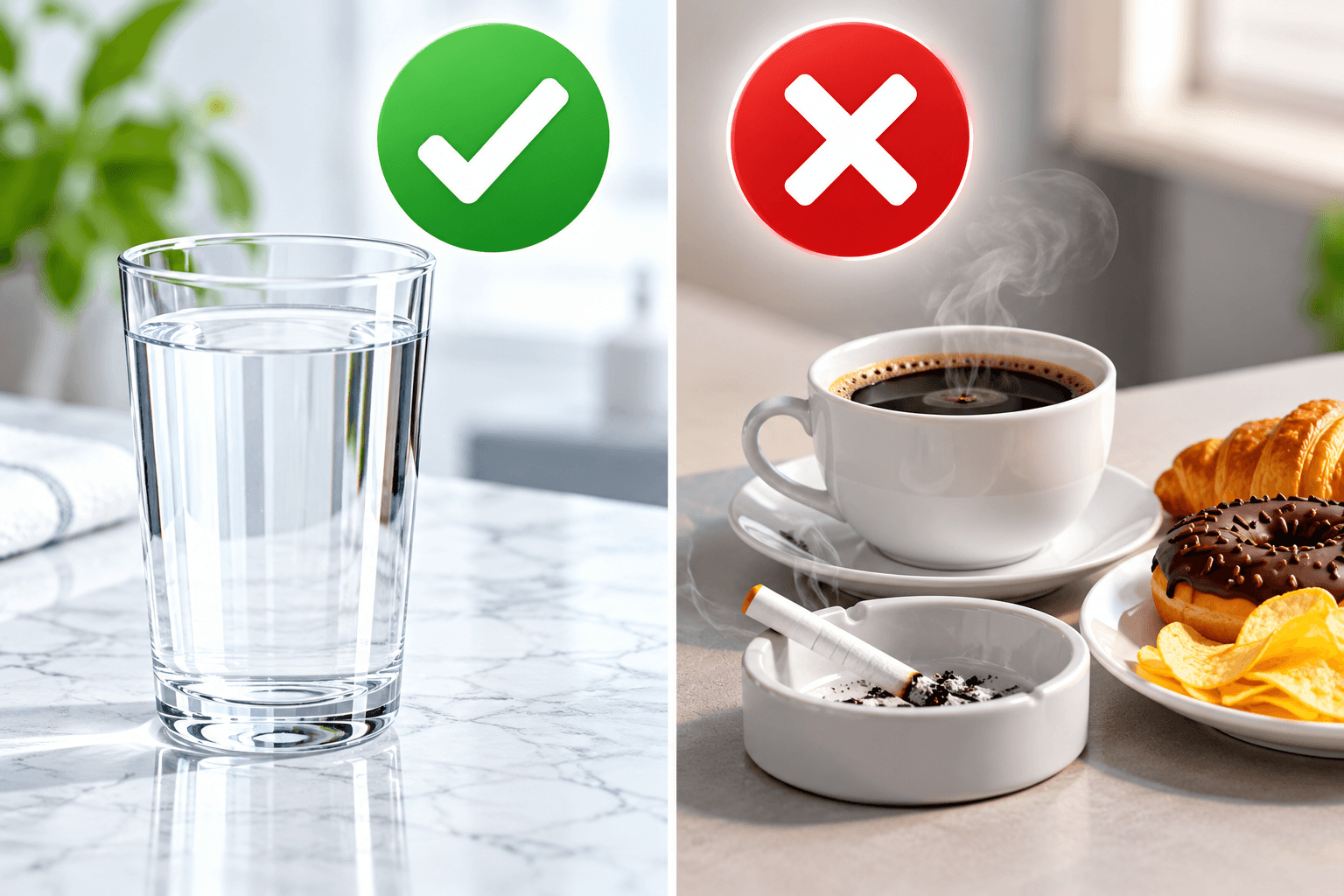
| Drinking coffee “because it’s black, no sugar” | Caffeine still affects glucose/lipids | Water only during fasting window |
| Fasting for 16+ hours “to be extra safe” | Can artificially raise or distort some markers, and causes dizziness | Stick to the 8–12 hour window specified |
| Stopping medication without asking | Can cause dangerous swings (especially insulin) | Always confirm with your doctor first |
| Booking an afternoon slot after fasting since midnight | Unnecessary long fast, discomfort, fainting risk | Book early morning instead |
| Not mentioning supplements like biotin | Can skew hormone/thyroid results | Disclose all supplements to the lab beforehand |
| Exercising hard the morning of the test | Can spike CK, lactate, and other markers | Keep activity light before the draw |
Q: Can I drink water while fasting for a blood test? Yes. Plain water is always allowed and recommended — it does not break a fast and makes the blood draw easier.
Q: What happens if I accidentally eat before a fasting blood test? Tell the lab staff before the draw. They will usually reschedule the fasting-dependent tests (like glucose or lipids) rather than proceed with inaccurate results.
Q: Do I need to fast for a CBC (complete blood count)? No. CBC is not affected by recent food intake, so you can eat and drink normally beforehand.
Q: How long should I fast before a cholesterol test? Most labs recommend 10–12 hours, though some modern guidelines accept as little as 9 hours for a standard lipid panel — confirm with your specific clinic.
Q: Can I take my medication while fasting for a blood test? Yes, in almost all cases. Fasting refers to food and drink (except water), not medication. Only stop medication if your doctor specifically instructs you to.
Q: Is fasting required for a full body checkup package in Dubai? Almost always yes, since these packages typically bundle glucose and lipid testing. Expect a 10–12 hour fasting requirement.
This article is for general informational purposes and does not replace advice from a licensed physician. Always confirm fasting instructions with the clinic performing your specific test. Content should be medically reviewed by a DHA/MOHAP-licensed physician before publishing.